


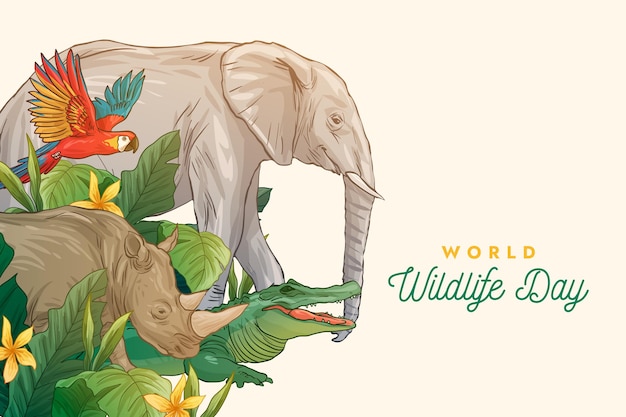
World Wildlife Day, celebrated annually on March 3rd, stands as the most prominent global event dedicated to celebrating the diverse and beautiful forms of wild fauna and flora while raising awareness about the critical importance of their conservation . This day serves as a unified platform for governments, civil society, businesses, and individuals around the world to come together and champion the cause of wildlife protection. Far more than a single day of celebration, it is a powerful advocacy tool to educate the public, mobilize political will, and generate resources for the pressing challenges facing our planet's biodiversity . The story of its inception is a remarkable tale of vision, collaboration, and dedication, transforming a simple idea into a cornerstone of the international environmental calendar.
The Genesis of a Global Observance
The origins of World Wildlife Day can be traced back to the dedicated efforts of individuals within the CITES Secretariat who recognized the need for a dedicated day to celebrate wildlife. The idea was first proposed by Juan Carlos Vasquez, a communications officer at the CITES Secretariat, to his then-superior, Secretary-General John E. Scanlon . While the initial concept was not embraced, it was revisited in the lead-up to the 16th meeting of the Conference of the Parties to CITES (CoP16), scheduled for March 2013 in Bangkok, Thailand. This meeting was particularly significant as it coincided with the 40th anniversary of the signing of the CITES convention itself .
John E. Scanlon, upon learning that the original 1973 conference in Washington D.C. was named the "World Wildlife Conference," saw a perfect opportunity to link the past with the present. He proposed that the Bangkok meeting be named the "World Wildlife Conference" as well, a suggestion that was well-received by the Thai government, the gracious hosts of CoP16 . Building on this momentum, the team, including Scanlon, Vasquez, and Jonathan Barzdo, worked with Thai officials to draft a resolution for the CITES meeting. The proposal was simple yet profound: to designate March 3rd the anniversary of the CITES signing in 1973 as World Wildlife Day. The draft resolution and supporting documents were submitted by the Thai government just before the deadline, a testament to the determination behind the initiative . The proposal was met with overwhelming support at CoP16, with nations like the United States, the original host of the 1973 conference, expressing strong endorsement. The resulting CITES Resolution Conf. 16.1 officially designated March 3rd as World Wildlife Day, calling upon the United Nations General Assembly to also enshrine it in the UN calendar .
The final and crucial step was to secure the endorsement of the United Nations. This required a formal resolution from the UN General Assembly. John Scanlon traveled to New York to assist the Thai UN delegation in drafting the necessary document. A key challenge arose when a UN member state ambassador inquired if the CITES Secretariat was prepared to facilitate the implementation of this new international day. Despite having no additional budget or resources allocated for such a task, Scanlon unhesitatingly affirmed the Secretariat's readiness, driven by the profound significance the day held . This commitment paid off. On December 20, 2013, at its 68th session, the United Nations General Assembly adopted resolution UN 68/205, officially proclaiming March 3rd as United Nations World Wildlife Day . The resolution reaffirmed the intrinsic value of wildlife and its diverse contributions ecological, genetic, social, economic, scientific, educational, cultural, recreational, and aesthetic—to sustainable development and human well-being . With just over two months to prepare for the first-ever celebration, the small CITES Secretariat team worked tirelessly to create a logo, launch a website, and establish a social media presence. The inaugural UN World Wildlife Day was celebrated on March 3, 2014, at the Palais des Nations in Geneva, featuring a star-studded lineup of speakers, including then-UN Secretary-General Ban Ki-moon, and marked the beginning of what would become a vital annual tradition .
The Foundational Role of CITES
The date of World Wildlife Day is not arbitrary; it is intrinsically linked to the Convention on International Trade in Endangered Species of Wild Fauna and Flora (CITES). Signed on March 3, 1973, CITES is an international agreement between governments with a fundamental mission: to ensure that international trade in specimens of wild animals and plants does not threaten their survival . The convention is a testament to international cooperation, conceived in the spirit of working across borders to regulate trade and safeguard species from over-exploitation .
Today, CITES remains one of the world's most powerful tools for wildlife conservation, offering varying degrees of protection to over 40,900 species of animals and plants, whether traded as live specimens, food, leather goods, or dried herbs . The UN General Assembly resolution that created World Wildlife Day specifically recognized the vital role of CITES in ensuring that international trade does not threaten the survival of species . Consequently, the CITES Secretariat was requested to facilitate the global observance of this day, in collaboration with other relevant UN organizations . This mandate connects the annual celebration directly to the ongoing work of regulating wildlife trade, combating illegal trafficking, and promoting sustainable practices that benefit both nature and people. The Global Environment Facility (GEF), for example, supports countries in building the skills and capacity needed to implement their commitments to CITES, such as through its Global Wildlife Program, which has contributed to training tens of thousands of law enforcement and wildlife management staff .
Themes: A Journey Through Conservation Priorities
Each year, World Wildlife Day adopts a specific theme to focus global attention and action on a particular aspect of wildlife conservation. These themes, chosen by the CITES Secretariat, reflect the evolving challenges and opportunities in the field, guiding discussions, events, and campaigns worldwide. The journey through these themes from the very first celebration offers a unique perspective on the shifting priorities of the international conservation community .
2015: "It's time to get serious about wildlife crime" – This early theme set a strong, urgent tone, focusing the world's attention on the severity and scale of illegal wildlife trafficking and the need for robust enforcement.
2016: "The future of wildlife is in our hands" – With a sub-theme on elephants, this theme empowered individuals and nations to take personal and collective responsibility for conservation, emphasizing that human actions directly dictate the survival of species.
2017: "Listen to the young voices" – This theme marked a significant shift towards engaging and empowering youth, recognizing them as the current and future stewards of the environment and encouraging their active participation in conservation dialogues.
2018: "Big cats: predators under threat" – This year honed in on a specific and charismatic group of species tigers, lions, leopards, jaguars, cheetahs, and others highlighting the unique challenges they face from habitat loss, human-wildlife conflict, and poaching.
2019: "Life below water: for people and planet" – For the first time, the day's focus dove beneath the surface to explore marine species, emphasizing the critical but often unseen importance of healthy oceans and the threats facing marine life.
2020: "Sustaining all life on Earth" – This theme took a holistic view, encompassing all species of wild fauna and flora as key components of the world's biodiversity. It aligned with the broader understanding that conservation must be comprehensive to be effective.
2021: "Forests and livelihoods: sustaining people and planet" – This theme explored the deep connection between forests, the wildlife within them, and the human communities that depend on them, highlighting the role of sustainable forest management in supporting both biodiversity and human well-being.
2022: "Recovering key species for ecosystem restoration" – Focusing on the conservation status of critically endangered species, this theme underscored the importance of targeted recovery efforts for keystone species, whose revival can help restore entire ecosystems.
2023: "Partnerships for wildlife conservation" – This theme celebrated the collaborative efforts across governments, Indigenous groups, the private sector, and conservation organizations, emphasizing that no single entity can succeed alone and that partnerships are essential for impactful conservation.
2024: "Connecting People and Planet: Exploring Digital Innovation in Wildlife Conservation" – This theme looked to the future, exploring how cutting-edge digital technologies, from AI-powered monitoring to data analytics, can be harnessed to protect wildlife and their habitats in an increasingly connected world .
2025: "Wildlife Conservation Finance: Investing in People and Planet" – This theme addressed a critical and often overlooked aspect of conservation: funding. It explored innovative financial mechanisms to bridge the significant gap between current investments and the resources needed to effectively protect biodiversity, from Debt-for-Nature swaps to wildlife conservation bonds.
The 2026 Theme: Medicinal and Aromatic Plants – Conserving Health, Heritage, and Livelihoods
For 2026, the chosen theme is "Medicinal and Aromatic Plants: Conserving Health, Heritage, and Livelihoods" . This theme invites a global rediscovery of the extraordinary plants that have supported human well-being for centuries, shining a spotlight on the vital yet often hidden connections between nature, culture, and economies . Medicinal and aromatic plants represent one of the most tangible links between biodiversity and human health. They form the foundation of many traditional healthcare systems, contribute significantly to modern medicine, and support global industries ranging from cosmetics and food to agriculture .
Globally, an estimated 50,000 to 70,000 species of medicinal and aromatic plants are harvested, with many communities, particularly Indigenous peoples, holding deep traditional knowledge about their sustainable use and stewardship. This theme highlights the importance of this heritage, recognizing the communities, experts, and knowledge-holders working to conserve both the species and the cultural traditions surrounding them . It also underscores the immense economic value of these plants, supporting rural livelihoods through sustainable harvest and trade. However, many of these species face growing threats from habitat loss, over-harvesting, and illegal trade. Over 20% of the species used globally are considered threatened with extinction on the IUCN Red List, making their conservation a global priority. The 2026 theme, therefore, calls for a shared responsibility to ensure their survival for future generations, integrating their conservation into broader efforts for planetary and human health.
How the World Celebrates: A Global Tapestry of Events
World Wildlife Day is celebrated in a multitude of ways, reflecting the creativity and passion of individuals and organizations worldwide. The official UN celebration typically features a high-level event, often livestreamed from a location like the Palais des Nations in Geneva, bringing together dignitaries, experts, and youth ambassadors . Beyond this, the day is marked by a rich tapestry of activities across the globe, all encouraged and coordinated through the official World Wildlife Day website .
One of the most popular and enduring traditions is the annual International Youth Art Contest. Hosted by IFAW in partnership with CITES and UNDP, this contest invites young artists aged 4-18 to submit original artwork illustrating the year's theme. In 2025, the contest received over 3,400 entries from 140 countries, showcasing the extraordinary talent and passion of young conservationists. For 2026, entrants are challenged to creatively depict the relationship between wildlife and medicinal or aromatic plants .
Other common celebrations include film showcases, such as the Jackson Wild Film Showcase, which shares powerful stories about wildlife and the people protecting it . Educational institutions and conservation organizations host workshops, seminars, and nature walks. For instance, at the Mahavir Harina Vanasthali National Park in Hyderabad, India, the 2026 celebration included the unveiling of a theme poster, the release of a bird book, essay and painting competitions for students, and a stall showcasing local medicinal plants and their traditional uses . Museums and botanical gardens also participate; in 2025, the Conservatoire et Jardin botaniques de Genève offered visits to its herbarium to display extinct plant species, serving as a poignant reminder of the stakes involved . Public spaces are also utilized, with CITES flags lining prominent bridges in Geneva, and social media campaigns using official kits to spread the message digitally. These diverse activities, from local community events to international webinars, all contribute to a powerful, unified global voice for wildlife.
The Profound Value of Wildlife and The Urgent Need for Action
The celebrations of World Wildlife Day are grounded in the profound and multifaceted value of wildlife. As the UN General Assembly resolution affirms, wildlife has intrinsic value and makes diverse contributions to sustainable development and human well-being . These contributions are not merely aesthetic or cultural; they are fundamental to our survival and economic stability.
Wildlife is essential for the ecosystem services that support life on Earth. Pollinators like bees, butterflies, and birds are responsible for the reproduction of many of the crops we eat, including apples, coffee, and onions. A world without pollinators would mean 50% fewer fruits and vegetables available to us . Other species, such as burrowing prairie dogs, grazing bison, and countless insects, enhance soil productivity, promoting the growth of vegetation . In our oceans, whales and walrus help promote the growth of plankton, which supports the fisheries that provide food security and coastal livelihoods . Predators like lions and wolves help maintain the health of prey populations, reducing the risk of disease spillover to humans and livestock. Scavengers like vultures and hyenas act as nature's cleanup crew, preventing the spread of deadly diseases like anthrax from rotting carcasses . Wildlife even helps protect us from natural disasters: beaver dams regulate water flow to prevent flooding, and oyster reefs shield coastlines from erosion and storm surges .
Despite this incalculable value, the world is facing a biodiversity crisis of alarming proportions. According to WWF's 2024 Living Planet Report, there has been a 73% average decline in the size of monitored populations of mammals, fish, birds, reptiles, and amphibians since 1970 . More than 1 million species are now estimated to be threatened with extinction . This loss is driven by human activities, including habitat destruction, over-exploitation, illegal and unsustainable wildlife trade, pollution, and climate change. The economic stakes are just as high as the ecological ones, with over half of the world's gross domestic product (GDP) dependent on nature . While an estimated USD 143 billion is invested annually in biodiversity conservation, this falls far short of the USD 824 billion needed each year . World Wildlife Day serves as a crucial, annual reminder of this urgent need. It is a call to action to step up the fight against wildlife crime, to innovate in conservation finance, to protect and restore habitats, and to recognize that our own future is inextricably linked with the future of the millions of species with whom we share this planet . It is a day to celebrate the beauty and diversity of the natural world, but also to recommit ourselves to ensuring that it thrives for generations to come.
Photo from : Freepik

0 Comment to "Dogecoin: Definition, History, Technology, Market Performance, and Future Prospects"
Post a Comment