The
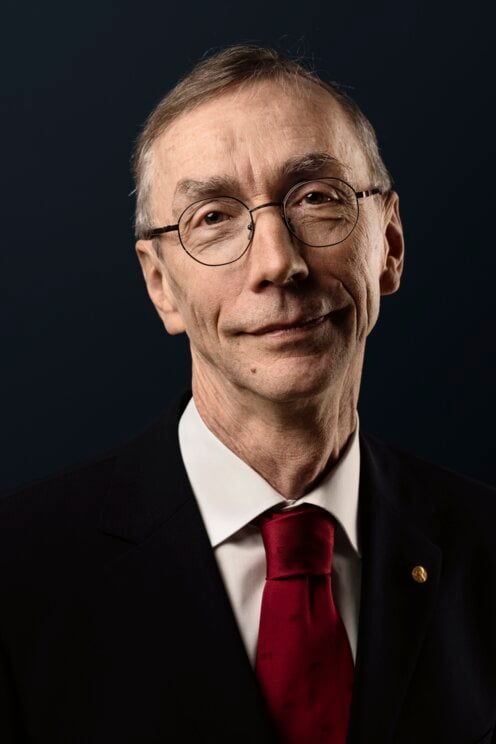
2022 Nobel Prize in Physiology or Medicine was awarded to Svante Pääbo
for his pioneering discoveries in human evolution through the analysis
of ancient DNA.
On October 3, 2022, the Nobel Assembly at the Karolinska
Institutet awarded the Nobel Prize in Physiology or Medicine to Svante
Pääbo, a Swedish geneticist, for his groundbreaking discoveries
concerning the genomes of extinct hominins and human evolution .
This award recognized a body of work that seemed to border on science
fiction: sequencing the genome of our long-extinct relatives, the
Neanderthals, discovering a previously unknown human ancestor called the
Denisovan, and revealing that these archaic species live on within the
DNA of modern humans. Through his pioneering research, Pääbo not only
illuminated previously unknown chapters of our evolutionary past but
also founded an entirely new scientific discipline—paleogenomics. This
field, dedicated to the reconstruction and analysis of genomic
information from extinct species, has fundamentally transformed our
understanding of what makes us uniquely human and continues to reveal
the profound physiological legacy our archaic ancestors have left within
us.
The Historical and Scientific Context
The
question of human origins has perpetually intrigued humanity.
Paleontology and archaeology have long been the primary tools for
probing our evolutionary history, providing crucial evidence through the
analysis of ancient bones and artifacts. These disciplines established
that anatomically modern humans, Homo sapiens, first appeared in Africa approximately 300,000 years ago . Our closest known relatives, the Neanderthals (Homo neanderthalensis),
developed outside of Africa and populated vast areas of Europe and
Western Asia from around 400,000 years ago until their sudden extinction
about 30,000 years ago . A pivotal moment in human prehistory occurred around 70,000 years ago when groups of Homo sapiens migrated from Africa into the Middle East and subsequently spread across the rest of the Eurasian continent . This meant that for tens of thousands of years, Homo sapiens
and Neanderthals coexisted in large parts of Eurasia. For decades, the
nature of their interactions was a subject of intense debate among
scientists. Did our ancestors simply replace the Neanderthals, or was
there some form of interaction, perhaps even interbreeding? The fossil
record alone could not provide definitive answers, and it became
increasingly clear that genetic analysis would be required to shed light
on the intricate relationship between modern humans and our extinct
cousins.
The
scientific journey toward understanding human evolution through
genetics had foundational roots in the work of researchers like Allan
Wilson. In a landmark study, Wilson and his team analyzed mitochondrial
DNA (mtDNA) from contemporary human populations. Mitochondrial DNA,
inherited solely from the mother and present in high copy numbers within
cells, is more easily accessible than nuclear DNA. Their results
pointed to a common African origin for all modern human populations,
providing crucial genetic support for the "Out of Africa" theory of
human evolution .
However, mtDNA represents only a tiny fraction of our total genetic
makeup, and to truly understand our relationship with extinct hominins,
scientists would need to go a step further. They would need to extract
and sequence genomic DNA from the archaic specimens themselves. This,
however, was considered a monumental, if not impossible, task at the
time.
The Seemingly Impossible Task of Studying Ancient DNA
The
immense technical challenges of studying ancient DNA are what made
Svante Pääbo's achievements so extraordinary. Early in his career, while
still a graduate student at Uppsala University, Pääbo nurtured a strong
fascination with Egyptology and the possibility of applying modern
genetic methods to study ancient specimens. In a clandestine side
project from his main PhD research, he managed to isolate DNA from a
2,400-year-old Egyptian mummy .
Although this initial foray was groundbreaking, Pääbo soon realized
that working with ancient DNA was plagued by extreme technical
challenges. He later acknowledged that his first publication likely
suffered from contamination from contemporary human DNA, a problem that
would haunt the field for years.
The
fundamental obstacles are profound. After an organism dies, its DNA
begins to degrade immediately, breaking down into short fragments over
thousands of years . Chemical modifications, such as the deamination of cytosine bases to uracil, further damage the genetic material .
The result is that only trace amounts of endogenous DNA remain in
ancient bones, and this minute quantity is overwhelmingly contaminated
with DNA from microbes in the soil and, even more problematically, from
contemporary humans who have handled the specimens .
As Pääbo himself described, the process is akin to trying to
reconstruct a complex jigsaw puzzle where most of the pieces are missing
or damaged.
Undeterred,
Pääbo dedicated his career to solving these problems. During his
postdoctoral work in Allan Wilson's laboratory at the University of
California, Berkeley, and later as a professor at the University of
Munich and director at the Max Planck Institute for Evolutionary
Anthropology in Leipzig, he tirelessly developed and refined methods for
ancient DNA analysis .
He instituted rigorous standards, including specialized clean-room
facilities to minimize contamination, and emphasized the necessity of
independent replication of results by other laboratories .
His group also developed sophisticated silica-based methods for
purifying DNA from ancient bones and devised techniques to identify the
characteristic damage patterns of ancient DNA, thereby distinguishing
true endogenous sequences from modern contaminants. These meticulous and innovative methodologies provided the essential toolkit that would make the unthinkable possible.
The Pioneering Discoveries in Hominin Genetics
The First Breakthrough: Neanderthal Mitochondrial DNA
Pääbo's
first major target was the Neanderthal. He began his investigation with
mitochondrial DNA (mtDNA). Given that each cell contains hundreds to
thousands of copies of mtDNA compared to just two copies of nuclear DNA,
the likelihood of retrieving mtDNA from ancient remains was
significantly higher .
He obtained a precious sample from the original Neanderthal type
specimen found in the Feldhofer Cave in Germany. Using polymerase chain
reaction (PCR) primers to amplify a short segment of mtDNA, his team
successfully sequenced a 105-base pair region. To ensure authenticity,
they implemented extensive control experiments and, crucially, sent a
separate bone sample to an independent laboratory at Pennsylvania State
University, which replicated the finding.
The
results, published in 1997, were stunning. The Neanderthal mtDNA
sequence was distinctly different from that of any modern human. On
average, the Feldhofer sequence differed from modern human sequences at
27 positions, whereas modern human sequences from around the globe
differed from each other at only eight positions on average .
This clearly indicated that Neanderthals were a genetically distinct
lineage and, at least based on mtDNA, had not contributed to the modern
human gene pool .
This initial success provided the first direct genetic glimpse into an
extinct hominin and proved that DNA could survive long enough to be
studied. However, the mtDNA was just the beginning; it represented only a
tiny fraction of the total genetic information and was inherited only
through the maternal line. To gain a comprehensive understanding, Pääbo
set his sights on an even more ambitious goal: sequencing the entire
Neanderthal nuclear genome.
Sequencing the Neanderthal Nuclear Genome
Sequencing
the nuclear genome was a task of Herculean proportions. The nuclear
genome is 3 billion base pairs long, and the technical challenges of
retrieving minute, degraded fragments of DNA and piecing them together
were immense .
At his newly founded Max Planck Institute in Leipzig, Pääbo and his
team leveraged revolutionary advances in high-throughput DNA sequencing
technology. They developed sophisticated computational methods to sort
the precious fragments of endogenous Neanderthal DNA from a overwhelming
background of microbial contamination.
Their
decades of relentless effort culminated in 2010 with the publication of
the first draft sequence of the Neanderthal genome .
This was a landmark achievement in science. Comparative analysis of
this genome with those of modern humans from different continents
yielded a sensational discovery. Contrary to the earlier conclusion from
mtDNA, the nuclear genome revealed that Neanderthals had interbred with Homo sapiens.
The evidence was that modern humans of non-African descent—from Europe
and Asia—shared more genetic variants with Neanderthals than did modern
humans from Africa .
This could only be explained by gene flow from Neanderthals into the
ancestors of modern non-Africans during their coexistence in Eurasia.
The research showed that approximately 1-4% of the DNA in modern-day
people of European and Asian ancestry originates from Neanderthals.
Pääbo had solved one long-standing mystery while simultaneously
uncovering a profound new truth about our own biological heritage.
A Sensational Discovery: The Denisovans
Even
as the Neanderthal genome was being completed, another extraordinary
discovery was emerging from a small, seemingly insignificant fragment of
a finger bone. This bone, dating to about 40,000 years ago, had been
discovered in the Denisova Cave in the Altai Mountains of southern
Siberia .
When Pääbo's team sequenced its DNA, they expected to find either a
Neanderthal or an early modern human. Instead, the genetic sequence was
unique, unlike anything known to science . Pääbo had discovered an entirely new hominin, which was named the Denisovan.
This
was a monumental achievement in paleoanthropology; it was the first
time a new hominin species had been identified solely through genetic
analysis, without any prior knowledge from the fossil record .
Subsequent comparisons showed that the Denisovans were a sister group
to the Neanderthals, having diverged from a common ancestor several
hundred thousand years earlier .
Just as with Neanderthals, Pääbo's team investigated whether Denisovans
had left a genetic mark on modern humans. The answer was yes, but in a
different part of the world. They found that Denisovan DNA is present in
modern-day populations in Melanesia and parts of Southeast Asia, with
individuals in these regions carrying up to 6% Denisovan ancestry.
This pattern suggested that Denisovans had once been widespread across
Asia and had interbred with the ancestors of modern Melanesians and
Australians as they migrated through the continent.
The Birth of Paleogenomics and Its Physiological Relevance
Through his seminal research, Svante Pääbo established an entirely new scientific discipline: paleogenomics .
This field focuses on the reconstruction and analysis of genomic
information from extinct species, and it has fundamentally transformed
studies of human evolution and migration. Following the initial
discoveries, Pääbo's group and numerous other researchers worldwide have
completed analyses of many additional genome sequences from extinct
hominins, creating a unique and invaluable resource for the scientific
community .
This new field has revealed a complex, intertwined evolutionary history
where mixing and gene flow between different hominin groups were common
occurrences. For instance, genetic evidence has even revealed the
existence of an individual from Denisova Cave who was a first-generation
hybrid, with a Neanderthal mother and a Denisovan father.
Beyond
satisfying our curiosity about our origins, paleogenomics has profound
relevance for human physiology and medicine today. The archaic gene
variants that modern humans acquired through interbreeding were not
merely passive souvenirs; some conferred significant survival advantages
in new environments, a process known as adaptive introgression . Striking examples have been identified that continue to influence human biology:
High-Altitude Adaptation: The Denisovan version of the EPAS1 gene,
which plays a crucial role in the body's response to low oxygen levels,
is common among present-day Tibetans. This gene variant provides a
survival advantage at high altitudes, demonstrating how archaic DNA
helped modern humans adapt to new environmental challenges .
Immune System Function:
Neanderthal genes have been found to affect how our immune system
responds to infections. Variants inherited from Neanderthals influence
the function of genes involved in our innate immune defense, potentially
shaping how different populations respond to pathogens
Disease Susceptibility and Severity:
Archaic ancestry can also have negative implications. Research led by
Pääbo and others identified a haplotype on chromosome 3, inherited from
Neanderthals, that significantly increases the risk of developing severe
COVID-19 and requiring mechanical ventilation . Other studies have linked Neanderthal DNA to increased susceptibility to conditions like diabetes, Crohn's disease, and lupus.
Other Physiological Traits:
Studies have explored the potential influence of archaic genes on
traits ranging from pain perception and skin physiology to metabolism
and even the risk of preterm birth .
The Father of Paleogenomics
Svante
Pääbo's journey to the Nobel Prize was one of extraordinary
perseverance and intellectual vision. The son of a Nobel laureate
himself (his father, Sune Bergström, won the Nobel Prize in Physiology
or Medicine in 1982), Pääbo has been recognized with numerous
prestigious awards throughout his career, including the Gruber Genetics
Prize, the Breakthrough Prize in Life Sciences, and the Lasker Award .
His work has been supported for over a decade by the European Research
Council, which recognized his "blue sky" research as exactly the kind of
high-risk, high-reward science that leads to paradigm-changing
discoveries .
In 2018, he was also awarded the HFSP Nakasone Award, which has
previously honored other scientists who later went on to win Nobel
Prizes.
The
Nobel Prize in Physiology or Medicine 2022 not only honors Svante
Pääbo's specific discoveries but also validates the entire field of
paleogenomics. By accomplishing what was once deemed impossible, he has
opened a completely new window into our past. His research has provided
definitive answers to long-standing questions about our relationship
with other hominins while simultaneously raising new and equally
profound questions. It has revealed that our evolutionary history was
not a simple linear progression but a complex tapestry of divergence,
coexistence, and interbreeding. Most importantly, Pääbo's work continues
to provide the basis for exploring the ultimate biological question: What, at the genetic level, makes us uniquely human?
The identification of the handful of genetic differences between modern
humans and our extinct relatives now provides a roadmap for scientists
to investigate the biological foundations of our complex culture,
creativity, and ability to adapt and conquer every corner of the globe.
Through his work, we have gained not only a deeper understanding of
where we came from but also new tools to understand the functioning of
our own bodies in health and disease.
