


On January 17, 1920, the United States of America awoke to a profound and unprecedented national experiment. At the stroke of midnight, the Volstead Act, the enforcement arm of the Eighteenth Amendment, took full effect, rendering the manufacture, sale, and transportation of "intoxicating liquors" a federal crime. This day marked the official start of what would become a tumultuous thirteen-year period known as Prohibition. Driven by a powerful coalition of social, religious, and political forces who envisioned a more sober, productive, and moral nation, this "Noble Experiment" would instead unleash a cascade of unintended consequences . It would transform the American social landscape, empower a new class of criminal entrepreneurs, burden the economy, and ultimately compel a historic reversal, teaching a complex lesson about law, morality, and human nature. To understand the full scope of Prohibition is to examine its deep historical roots, the mechanics of its flawed enforcement, the vibrant and defiant culture it spawned, and the lasting societal shifts that ensured its dramatic repeal in 1933.
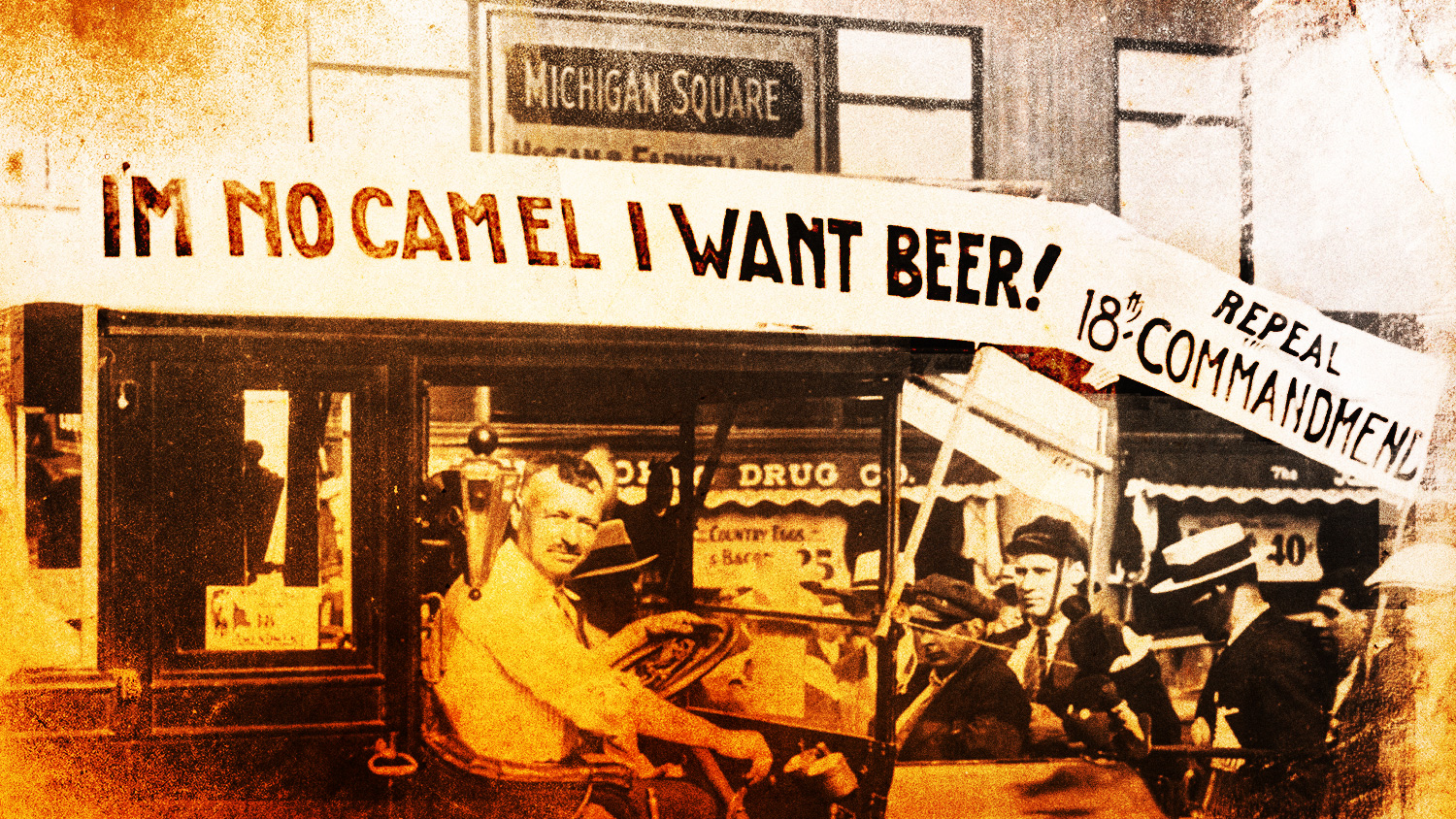
The drive toward national Prohibition was not a sudden impulse but the culmination of a century-long crusade rooted in the nation's complicated relationship with alcohol. From the colonial era through the 19th century, alcohol was deeply woven into the fabric of American daily life, viewed as a "good creature of God" and consumed in quantities that would stagger the modern drinker . By 1830, per capita consumption of pure alcohol had peaked at an estimated 7.1 gallons per year, a figure more than three times today's average. However, as the nation industrialized and urbanized in the 19th century, the social costs of widespread alcohol abuse became increasingly visible and alarming. The temperance movement emerged as a powerful reform effort, initially advocating moderation but gradually shifting toward outright abolition. Women were at the forefront of this fight, with organizations like the Woman's Christian Temperance Union (WCTU) arguing that alcohol was the primary destroyer of families and marriages, leaving wives and children impoverished and vulnerable to domestic violence. They were joined by Progressive Era reformers who saw saloons as dens of vice and political corruption, and by industrialists who believed sobriety was essential for a safe and efficient workforce .
The movement found its most effective political weapon in the Anti-Saloon League, formed in 1893. Under the strategic leadership of attorney Wayne Wheeler, the League perfected single-issue politics, applying relentless pressure on legislators at all levels to support dry laws . World War I provided the final catalyst for national action. Anti-German sentiment turned against the nation's prominent German-American brewers, while the need to conserve grain for food and the armed forces was framed as a patriotic duty. The temporary Wartime Prohibition Act was passed in 1918, paving the way for a permanent constitutional change. On January 16, 1919, the Eighteenth Amendment was ratified, prohibiting the "manufacture, sale, or transportation of intoxicating liquors" nationwide. To give this amendment teeth, Congress passed the National Prohibition Act, known universally as the Volstead Act after its congressional sponsor, Andrew Volstead. Despite a veto from President Woodrow Wilson, Congress overrode it, and the act became law on October 28, 1919, setting the stage for enforcement to begin on January 17, 1920 .
The Volstead Act was a complex and often contradictory piece of legislation. Its core provision defined any beverage containing more than 0.5 percent alcohol as "intoxicating," a strict standard that surprised many Americans who had expected only hard spirits to be banned . The Act did not make private consumption or possession illegal, creating a fundamental loophole. Furthermore, it was riddled with exceptions that would be widely exploited. Pharmacists could prescribe medicinal whiskey, leading to a suspicious tripling of registered pharmacists in New York State. Clergy could obtain wine for sacramental purposes, prompting a surge in church enrollments and self-professed rabbis. Perhaps most famously, the Act permitted the production of "non-intoxicating cider and fruit juice" at home. The grape industry promptly sold bricks of grape concentrate with warnings not to dissolve them in water and let them sit, lest they ferment into wine a set of instructions followed by millions . From its first day, the law was both rigid in theory and porous in practice.
The federal government was woefully unprepared to enforce this vast new mandate. The initial Prohibition Unit was a small, underfunded bureau within the Treasury Department. Across entire multi-state regions, only a handful of agents were tasked with policing millions of people . These agents were often poorly paid, making them highly susceptible to the immense bribes offered by bootleggers. As Chicago's police chief noted, a majority of his own force was involved in the bootleg trade. This systemic corruption eroded public trust in law enforcement and the justice system. Court dockets became clogged with Prohibition cases, leading to the widespread adoption of plea bargains to clear backlogs, a practice that became a permanent feature of American jurisprudence . The cat-and-mouse game of enforcement was largely a losing battle for the government, as a vast and thirsty public had no intention of giving up drink.
In response to the dry law, a parallel "wet" society flourished in the shadows and, often, in plain sight. The speakeasy became the iconic symbol of the era. These illicit bars, which sometimes required a whispered password for entry, proliferated wildly. By the end of the 1920s, New York City alone had an estimated 30,000 to 100,000 speakeasies far more legal bars than existed before Prohibition . They ranged from gritty backrooms to lavish clubs offering jazz, dancing, and a sense of liberated glamour. The cocktail, once a rarity, surged in popularity as a way to mask the harsh taste of poorly made bootleg liquor. This underground nightlife helped blur social lines, bringing together men and women, the wealthy and the working class, in shared defiance of the law. The home also became a center of production, with homemade "bathtub gin" and wine becoming common. For many citizens, breaking the Volstead Act was not seen as a serious crime but as a legitimate act of personal liberty, making the nation, in the words of one commentator, "a nation of scofflaws" .
This vast, illegal demand created the most infamous consequence of Prohibition: the rise of organized crime on an industrial scale. The prohibition of alcohol did not eliminate the market; it simply handed a multi-billion dollar industry over to criminal syndicates . Bootlegging the illegal production, smuggling, and distribution of alcohol became incredibly lucrative. Criminal empires were built by figures like Chicago's Al Capone, who reportedly earned $60 million a year (hundreds of millions in today's dollars) through his control of the city's alcohol trade. These gangs fought vicious, bloody turf wars, leading to a dramatic spike in violent crime. The St. Valentine's Day Massacre of 1929, where Capone's men executed seven rivals, became a national symbol of Prohibition's failure. The enormous profits from bootlegging also allowed gangs to corrupt police, prosecutors, judges, and politicians on an unprecedented scale, embedding criminality within the very institutions meant to uphold the law .
Economically, Prohibition was a disaster. It immediately wiped out a massive legal industry, shuttering over 200 distilleries, 1,000 breweries, and 170,000 liquor stores, and eliminating nearly 250,000 jobs at the outset . Contrary to the hopes of "dry" advocates, these losses were not offset by booms in other sectors. Restaurants failed without liquor sales, theater revenues declined, and sales of soft drinks and other substitutes did not meet expectations. Most critically, governments lost a vital source of revenue. Before Prohibition, alcohol taxes provided up to 75% of some states' budgets and significant federal income. This revenue vanished overnight, while the cost of enforcing Prohibition soared, reaching over $300 million nationally . This double financial blow lost taxes and high enforcement costs crippled public finances, a problem that became catastrophic with the onset of the Great Depression in 1929.
The cultural and social impact of Prohibition was equally profound. It exacerbated pre-existing divisions in American society, often along lines of ethnicity, class, and religion. The movement had been largely driven by rural, Protestant, native-born Americans, while opposition was strongest among urban, Catholic, and immigrant communities . This cultural clash made the law feel like an imposition of one group's values on another. Furthermore, the illegal alcohol trade had dire public health consequences. With no regulation, bootleggers often sold dangerously adulterated liquor, sometimes containing toxic industrial alcohol. On average, 1,000 Americans died each year from drinking tainted liquor. While some health statistics, like deaths from liver cirrhosis, did initially decline, the overall cost in lives from poisoned alcohol and gang violence was immense .
By the late 1920s, public opinion had turned decisively against Prohibition. The Wickersham Commission, appointed by President Herbert Hoover to study enforcement, concluded in 1929 that the law was widely disobeyed, nearly impossible to enforce, and fueled corruption and crime . The onset of the Great Depression was the final blow. With the nation in economic despair, the argument for restarting a legal alcohol industry to create jobs and generate desperately needed tax revenue became overwhelming. The 1932 presidential election became a referendum on Prohibition, and Franklin D. Roosevelt's victory on a platform that included repeal signaled the end. In a historic first, one constitutional amendment was used to repeal another. The Twenty-first Amendment, ratified on December 5, 1933, officially ended national Prohibition, returning the regulation of alcohol to the states .
The legacy of Prohibition is a lasting and complex one. It demonstrated the severe limitations of using criminal law to mandate private morality and shape social behavior on a mass scale. The experiment created a permanent template for organized crime in America and permanently altered the relationship between citizens and the federal government. It left a patchwork of state and local alcohol laws that persist to this day . Perhaps its most enduring lesson is a warning about the law of unintended consequences: a policy designed to foster temperance instead fostered intemperance, crime, and disrespect for the law; a measure intended to improve the economy devastated it; a reform aimed at uniting the nation around a moral vision ended up deepening its social divisions . The "Noble Experiment" stands as a pivotal chapter in American history, a thirteen-year period that began with a moral crusade and ended with a pragmatic retreat, forever changing the nation's legal, social, and cultural landscape.
0 Comment to "The Volstead Act's Dawn: America's 1920 Descent into Prohibition's Noble Experiment and Unforeseen Consequences"
Post a Comment