


Lennart Carleson: The Mathematical Visionary Who Redefined Harmonic Analysis
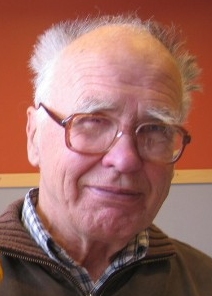
Lennart Carleson: The Swedish Master of Modern Analysis
Lennart Axel Edvard Carleson, a name that resonates with profound respect in the mathematical world, stands as a colossus of 20th and 21st-century analysis. Born on March 18, 1928, in Stockholm, Sweden, Carleson's seven-decade-long career is a testament to the power of intellectual tenacity and deep geometric insight . His work fundamentally reshaped entire fields, most notably harmonic analysis and dynamical systems, solving problems that had stymied mathematicians for generations. The Abel Prize Committee's 2006 citation perfectly encapsulates his legacy: "Carleson's work has forever altered our view of analysis. Not only did he prove extremely hard theorems, but the methods he introduced to prove them have turned out to be as important as the theorems themselves". More than a brilliant problem-solver, Carleson is an architect of mathematical theory, a builder of institutions, and a mentor who cultivated the next generation of analysts .
Foundations and Formative Influences
Carleson's academic journey began in the robust Scandinavian mathematical tradition. After graduating from secondary school in Karlstad in 1945, he entered Uppsala University, where he would remain connected for most of his life . His intellectual formation was decisively shaped by his doctoral supervisor, Arne Beurling, one of Sweden's most formidable analysts. Under Beurling's guidance, Carleson earned his doctorate in 1950 with a thesis titled On a Class of Meromorphic Functions and Its Exceptional Sets. He later expressed immense gratitude for Beurling's mentorship, stating that he was guided "into a fruitful area of mathematics" and learned that "only hard problems count" . This ethos of tackling fundamental challenges became the hallmark of Carleson's own career.
A pivotal year of post-doctoral work at Harvard University (1950-51) exposed him to the broader international community. There, he engaged in deep discussions about Fourier series with two giants of analysis: Antoni Zygmund and Raphaël Salem . This interaction was particularly fateful. Zygmund, an authority on Fourier analysis, was convinced that a central conjecture in the field (Luzin's conjecture) was false and encouraged the young Carleson to search for a counterexample . Carleson spent over a decade pondering this problem, an intellectual struggle that would ultimately lead him to one of the century's most celebrated mathematical triumphs.
The Pillars of a Monumental Career: Landmark Contributions
Carleson's research portfolio is distinguished by its depth, breadth, and transformative power. His contributions are not isolated results but foundational advancements that created new tools and opened new fields of inquiry.
1. Carleson's Theorem and the Conquest of Luzin's Conjecture
Undoubtedly, his most famous achievement is the 1966 proof of Lusin's conjecture, a result now universally known as Carleson's Theorem .
The problem concerns Fourier series, a method developed in the early
19th century by Joseph Fourier to represent complex signals as sums of
simple sine and cosine waves.
A fundamental question persisted: If you take a square-integrable
function (a broad and useful class of functions), does its Fourier
series converge to the function's actual value at most points? In 1913,
Nikolai Luzin conjectured that the answer was "yes," but the
mathematical community grew skeptical after Andrey Kolmogorov shocked
the world in 1926 by constructing a continuous function whose Fourier series diverged everywhere.
Carleson approached the problem with a unique perspective. After years of attempting to build ever more complex counterexamples as Zygmund suggested, he experienced a profound realization: "I suddenly realised that what you should try to do was the opposite, you should try to prove what was not fashionable, namely to prove convergence" . His subsequent proof, presented at the 1966 International Congress of Mathematicians in Moscow, was a breathtaking display of technical mastery and originality. He demonstrated that for any square-integrable function, its Fourier series converges to the function pointwise almost everywhere (i.e., except on a set of points with zero measure, which is negligible for practical purposes). This result validated the core utility of Fourier's revolutionary idea and settled a problem that had stood for over half a century. The proof was so novel and intricate that it took the mathematical community nearly two more decades to fully absorb and simplify its ideas .
2. The Corona Theorem and Carleson Measures
Just a few years earlier, in 1962, Carleson had solved another monumental problem in complex analysis: the corona problem for the Hardy space on the unit disk .
The problem, posed by Leonhard S. Nirenberg, asks whether the unit disk
is "dense" in the maximal ideal space of the algebra of bounded
analytic functions—a question with profound implications for function
theory. Carleson's affirmative solution was another tour de force.
Perhaps even more significant than the result itself was the powerful tool he invented to achieve it: Carleson measures . These are measures on the unit disk that satisfy a specific geometric condition relating the measure of a region to the size of its boundary arc on the circle. The concept proved to be extraordinarily fertile. Carleson measures transcended their original purpose and became a fundamental, ubiquitous tool in modern complex analysis, harmonic analysis, and operator theory, providing a crucial link between function theory and geometry.
3. Pioneering Dynamical Systems and Strange Attractors
In
the latter part of his career, Carleson, in collaboration with his
student Michael Benedicks, ventured into the theory of dynamical systems
and chaos. In a landmark 1991 paper, they provided one of the first
rigorous proofs of the existence of a "strange attractor" in the Hénon map, a simple two-dimensional system known for exhibiting chaotic behavior .
This work was groundbreaking. It moved the study of chaotic dynamical
systems from numerical observation and conjecture to firm mathematical
ground. The "tour de force" methods they developed opened an entirely
new area of rigorous inquiry into chaotic systems, influencing a
generation of researchers.
4. Further Seminal Work
Carleson's genius touched numerous other areas:
Quasiconformal Mappings: In 1974, he solved the difficult extension problem for quasiconformal mappings in three dimensions, introducing deep methods later generalized to arbitrary dimensions .
Bochner-Riesz Means: In 1972, he proved sharp -boundedness results for Bochner-Riesz means in two dimensions, a central problem in Euclidean harmonic analysis .
Potential Theory: His 1967 monograph, Selected Problems on Exceptional Sets, is still cited as a classic of "extraordinary technical skill" in the field .
Leadership, Mentorship, and Institutional Legacy
Carleson's impact extends far beyond his published papers. He has been a pivotal figure in shaping the global mathematical landscape through leadership and mentorship.
For sixteen years (1968-1984), he served as the director of the prestigious Mittag-Leffler Institute in Djursholm, Sweden . Under his stewardship, he transformed the institute from a relatively dormant entity into one of the world's leading and most active international research centers for mathematics, hosting countless visiting researchers and fostering groundbreaking collaborations.
From 1978 to 1982, he served as President of the International Mathematical Union (IMU), where he played a crucial diplomatic role . He worked tirelessly to reintegrate the People's Republic of China into the IMU and was a principal driving force behind the establishment of the Rolf Nevanlinna Prize (now the IMU Abacus Medal), created to recognize outstanding contributions in mathematical aspects of information sciences .
As an educator, Carleson supervised 29 PhD students, many of whom, like Svante Janson and Kurt Johansson, have become leading mathematicians in their own right . His influence, as noted by mathematician Peter W. Jones, comes from "his generosity, encouragement and selfless giving of himself".
Accolades and Lasting Recognition
The magnitude of Carleson's contributions has been recognized with the highest honors the mathematical community can bestow.
Abel Prize (2006): Awarded "for his profound and seminal contributions to harmonic analysis and the theory of smooth dynamical systems" . Often described as the "Nobel Prize of Mathematics," this was the crowning achievement of his career .
Wolf Prize in Mathematics (1992): Shared with John G. Thompson, awarded for his "fundamental contributions to Fourier analysis, complex analysis, quasiconformal mappings and dynamical systems".
Sylvester Medal (2003) from the Royal Society of London and the Lomonosov Gold Medal (2002) from the Russian Academy of Sciences.
Election to Numerous Academies: He is a member or foreign member of nearly every major scientific academy, including the Royal Swedish Academy of Sciences, the French Academy of Sciences, the U.S. National Academy of Sciences, the Royal Society (London), and the Norwegian Academy of Science and Letters .
Lennart Carleson embodies the ideal of a mathematician. He combined fearless problem-solving with the creation of enduring theoretical frameworks. His work on Fourier series alone would secure his place in history, but his contributions to complex analysis, dynamical systems, and his service to the global mathematical community paint the portrait of a true pioneer. As the Abel Committee noted, he concentrated "on only the most difficult and deep problems," and once they were solved, he moved "on to even wilder and more remote domains of Science" . Through his theorems, his methods, and his students, his legacy continues to shape the quest for mathematical understanding.

0 Comment to "Lennart Carleson: Harmonic Analysis Pioneer & 2006 Abel Prize Laureate, a Mathematical Legacy"
Post a Comment