


The 1870 incorporation of the Standard Oil Company of Ohio marked the formal beginning of an entity that would fundamentally reshape global industry, establish the archetype of the modern corporation, and ignite a lasting national debate about the power of private enterprise. Founded by John D. Rockefeller and his associates, Standard Oil embarked on a relentless quest for efficiency and market dominance, achieving unparalleled control over the American oil industry . Its trajectory from explosive growth through controversial tactics, to its landmark court-ordered dissolution, and finally to the enduring legacy of its successor companies forms one of the most consequential chapters in business and legal history.
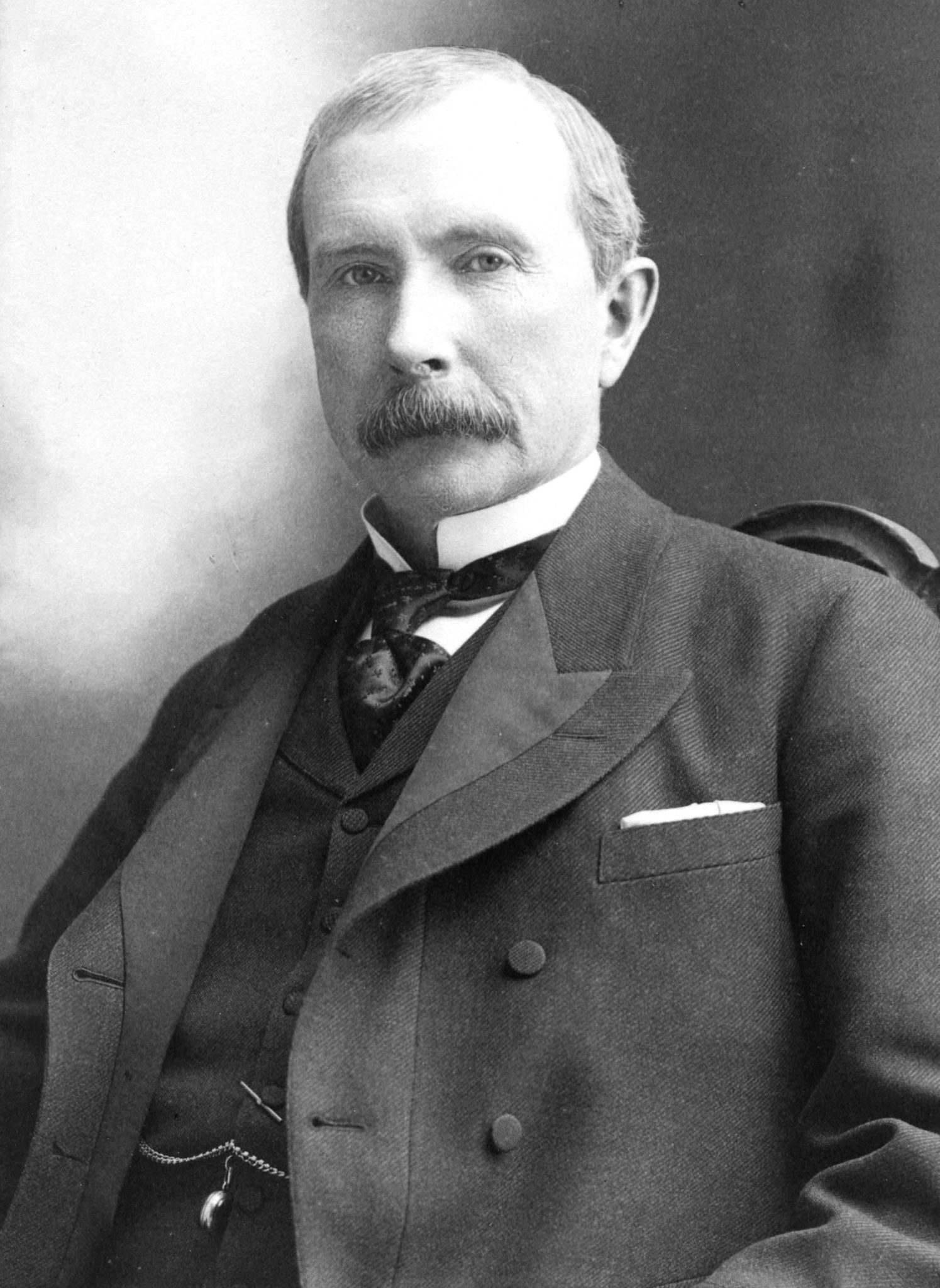
The Foundation: John D. Rockefeller and the Pre-1870 Oil Business
The man who would build this empire, John Davison Rockefeller, was born in 1839 in Richford, New York . His upbringing instilled a unique dichotomy of values: from his itinerant, "snake-oil" salesman father, William, he learned the sharp practices of deal-making and a belief in the "sacredness of contracts". From his devoutly religious mother, Eliza, he absorbed the disciplines of thrift, hard work, and charitable giving . This combination ruthless business acumen paired with a profound sense of religious duty would define his life.
Rockefeller’s business education began in Cleveland, Ohio, where his family moved in 1853 . At age 16, he took his first job as an assistant bookkeeper for a produce commission firm, Hewitt & Tuttle. He proved to be a meticulous and scrupulous record-keeper, with a particular talent for calculating complex transportation costs, a skill that would later become a cornerstone of his competitive strategy. By 1859, with a $1,000 loan from his father (at 10% interest), he went into business for himself, forming a commodities partnership, Clark & Rockefeller. The venture thrived during the Civil War, but Rockefeller's foresight led him to a newer, more volatile industry: oil .
The American oil industry was born in 1859 when Edwin Drake successfully drilled the first commercial oil well in Titusville, Pennsylvania . The resulting boom was chaotic, characterized by rampant speculation, wild price swings, and tremendous physical waste, with oil often flooding local creeks. In 1863, Rockefeller invested in a Cleveland refinery operated by chemist Samuel Andrews. He was drawn not to the risky business of drilling, but to the more controllable process of refining crude oil into kerosene, the primary illuminant of the era. By 1865, he bought out his original partners to gain full control, and in 1867 he formed the pivotal partnership of Rockefeller, Andrews & Flagler with Henry M. Flagler. This firm was already the largest refiner in Cleveland when, seeking greater capital and a more effective structure for expansion, they decided to incorporate .
The Incorporation and the "Cleveland Massacre"
On January 10, 1870, the Standard Oil Company of Ohio was incorporated with a capital of $1 million . The name was chosen to signify the reliable, standardized quality of its kerosene. John D. Rockefeller was president and the largest shareholder; his brother William was vice president; Henry Flagler was secretary-treasurer; and Stephen V. Harkness was a key silent investor. From the start, Rockefeller’s philosophy was clear: eliminate waste, achieve maximum efficiency through scale, and turn every byproduct into a profitable good. He built his own barrel factories, bought timber tracts and kilns to control costs, and hired scientists to find uses for refinery waste, developing over 300 by-products .
Standard Oil’s most significant and controversial advantage, however, came from railroad rebates. Because of the enormous volume of oil it promised to ship, Standard Oil could negotiate secret discounts from railroad companies, drastically lowering its transportation costs . In 1868, Flagler secured a deal with the New York Central for a rate of $1.65 per barrel to New York City, a substantial cut from the official $2.40 rate, in return for guaranteeing 60 carloads of oil per day. Smaller competitors, who could not promise such volume, were unable to secure similar rates, placing them at a severe disadvantage .
This system was taken to an extreme with the 1872 South Improvement Company scheme, a secret collusion between Rockefeller, other select refiners, and major railroads . The plan would have fixed shipping rates at a high level while giving the member refiners not only large rebates but also "drawbacks" a payment taken from the freight charges of their non-member competitors. Although public outrage forced the railroads to cancel the scheme before any oil was shipped under it, the mere threat proved catastrophic for Rockefeller’s Cleveland competitors. In what became known as the "Cleveland Massacre," between February and March of 1872, Standard Oil used the climate of fear to buy out 22 of its 26 local rivals, often at distressed prices. By the end of the year, Standard Oil controlled over a quarter of the nation's refining capacity .
The Rise of the Trust and the Monopoly
Standard Oil’s ambition was hemmed in by state laws that prevented an Ohio corporation from owning property or stock in companies based elsewhere . To overcome this, Rockefeller’s lawyers devised a revolutionary legal structure: the trust. On January 2, 1882, the Standard Oil Trust was formed. The shareholders of 40 affiliated companies placed their stock "in trust" with a board of nine trustees, including John and William Rockefeller. This board then directed the operations of the entire conglomerate as a single entity, creating what was, in effect, the world's first great multinational corporation. The trust was headquartered at 26 Broadway in New York City, becoming a symbol of corporate power .
Through this mechanism, Standard Oil’s dominance became overwhelming. By the late 1880s, it controlled approximately 90% of the refining and pipeline capacity in the United States . Its efficiency was undeniable. By achieving massive economies of scale and relentlessly innovating, Standard Oil drove the price of refined kerosene down from 58 cents per gallon in 1865 to 8 cents by the 1880s, making illumination affordable for millions. However, its tactics—predatory pricing, industrial espionage, and the continued use of secret rebates even as it built its own pipeline network to bypass resistant railroads made it the most hated corporation in America .
This growing power collided with a rising public demand for reform. Journalist Ida Tarbell, whose father had been ruined by Standard Oil, published a devastating 19-part exposé in McClure’s Magazine starting in 1902, detailing the company's cutthroat practices . Politically, the Sherman Antitrust Act of 1890 provided the legal tool to challenge monopolies. After years of litigation, the State of Ohio successfully sued to dissolve the original trust in 1892, but Standard Oil simply reorganized its holdings under the more lenient laws of New Jersey, creating Standard Oil Company (New Jersey) as a massive holding company in 1899 .
The Dissolution and the Birth of Modern Oil Giants
The federal government’s final assault began in 1906. The U.S. Justice Department filed suit against Standard Oil Company of New Jersey under the Sherman Act . After a protracted legal battle, the U.S. Supreme Court issued its historic ruling on May 15, 1911. The Court found Standard Oil guilty of monopolistic practices and unreasonable restraint of trade, and ordered it broken into 34 distinct, independent companies .
Below is a table of the most significant successor companies and their modern lineages:
| 1911 Successor Company | Key Mergers & Acquisitions | Modern Corporate Identity |
|---|---|---|
| Standard Oil of New Jersey (Jersey Standard) | Merged with Humble Oil (1959), renamed Exxon (1972) |
| Standard Oil of New York (Socony) | Merged with Vacuum Oil (1931), renamed Mobil (1966) |
| Standard Oil of California (Socal) | Acquired Standard Oil of Kentucky (1961), renamed Chevron (1984) |
| Standard Oil of Indiana | Acquired Standard Oil of Nebraska & Kansas, renamed Amoco (1985) |
| Standard Oil of Ohio (Sohio) | -- | BP (acquired by BP, 1987) |
| Atlantic Refining | Merged with Richfield Oil (1966) to form ARCO |
| Part of Marathon Petroleum (via Sunoco/BP spin-offs) | ||
| Continental Oil Company (Conoco) | Merged with Phillips Petroleum (2002) | ConocoPhillips (downstream operations spun off as Phillips 66, 2012) |
The dissolution made Rockefeller, who retained his shareholdings in all the new companies, even wealthier as the stocks of the "Baby Standards" soared in value. By 1916, he was pronounced the world's first billionaire . He had retired from active management in the mid-1890s and spent the last four decades of his life on philanthropy. Guided by his Baptist faith and the principle of "scientific giving," he distributed over $500 million, founding the University of Chicago, the Rockefeller Institute for Medical Research (now Rockefeller University), and, in 1913, the Rockefeller Foundation, which played a pivotal role in eradicating hookworm in the American South. He died in 1937 at the age of 97 .
The Enduring Legacy
The story of Standard Oil’s incorporation in 1870 is more than a corporate founding; it is the origin story of modern industrial America. The company demonstrated the transformative power of efficiency, vertical integration, and scale, setting a template for global business. Simultaneously, it became the definitive case study in the dangers of unfettered monopoly, directly leading to the modern framework of antitrust law and government regulation of big business. The corporate descendants of its 1911 breakup ExxonMobil, Chevron, BP, and ConocoPhillips remain among the largest and most powerful energy companies in the world, a testament to the enduring structure Rockefeller pioneered. The 1870 incorporation thus set in motion a chain of events that forever altered the economic, legal, and physical landscape of the modern world.

0 Comment to "The 1870 Incorporation of Standard Oil: Rockefeller's Founding, Monopoly Power, Antitrust Breakup, and Lasting Corporate Legacy in Global Energy"
Post a Comment