


The awarding of the inaugural Bollingen Prize to Ezra Pound in February 1949 was far more than a simple literary announcement; it became one of the most explosive and consequential cultural events in mid-twentieth-century America. The decision by a distinguished jury to honor Pound's The Pisan Cantos forced a public reckoning with questions that cut to the very heart of modern society: Could art of great beauty be created by a man accused of treason? Could aesthetic achievement be separated from the artist's moral and political character? And who had the right to decide these questions—a small elite of literary experts or the broader public? The controversy that erupted would ultimately lead to congressional intervention, the reorganization of a major literary prize, and a debate that continues to resonate in every discussion of art and cancel culture today .
The Genesis of the Bollingen Prize
To understand the impact of the 1949 award, one must first understand the unique origins of the prize itself. It was not a government initiative but the product of private philanthropy with deep intellectual roots. The prize was established in 1948 thanks to a $10,000 grant from the Bollingen Foundation to the Library of Congress . The foundation had been created in 1945 by Paul Mellon and his wife, Mary Conover Mellon . An heir to the vast Mellon banking and industrial fortune, Paul Mellon was also a man of significant intellectual curiosity. He and his wife named the foundation after the Bollingen Tower, the country retreat in Bollingen, Switzerland, of the famed psychoanalyst Carl Jung . Mary Conover Mellon was a particularly devoted follower of Jung, and the foundation's initial mission was deeply tied to disseminating his work on analytical psychology, archetypes, and the collective unconscious through a major publication effort known as the Bollingen Series .
The Bollingen Foundation's foray into poetry, therefore, came from this same spirit of supporting deep, often complex, explorations of culture and the human psyche. The $10,000 gift to the Library of Congress was intended to establish an annual $1,000 prize for the highest achievement in American poetry . The Library of Congress, as a national institution, seemed the perfect home for such an award. Crucially, the administration of the prize was entrusted to the Library's Fellows in American Letters. This was not a random committee but a veritable who's who of the mid-century literary elite, a group that included some of the most influential poets and critics of the era. The jury that would make the first award consisted of Conrad Aiken, W.H. Auden, Louise Bogan, Katherine Garrison Chapin, T.S. Eliot, Paul Green, Robert Lowell, Katherine Anne Porter, Karl Shapiro, Theodore Spencer, Allen Tate, Willard Thorp, and Robert Penn Warren . This was, in essence, the high priesthood of American letters, dominated by figures associated with the formalist and intellectually rigorous approach known as the New Criticism. Their decision would not be merely a choice; it would be a statement.
The Controversial Choice: Ezra Pound and The Pisan Cantos
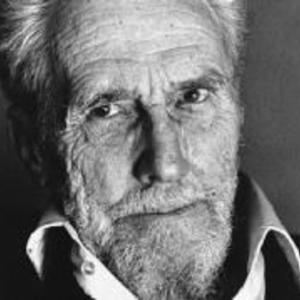
The choice these Fellows made was for Ezra Pound's recently published The Pisan Cantos . To give the first award to Pound was, on the one hand, a recognition of his towering, if controversial, influence on modern poetry. He had been a crucial mentor to figures like T.S. Eliot and Robert Frost, a tireless promoter of Imagism and Vorticism, and the architect of the ambitious, sprawling epic poem The Cantos, which he had been working on for decades. The Pisan Cantos, a section of this larger work, was composed under extraordinary and harrowing circumstances .
In 1945, as the Allies defeated the Axis powers in Europe, Pound was arrested by American forces in Italy. He had spent the war years living in Fascist Italy, where he had made over a hundred broadcasts on Rome Radio. In these often-rambling speeches, he expressed support for Mussolini, railed against American President Franklin D. Roosevelt, attacked usury, which he often conflated with international finance and Jews, and employed virulently anti-Semitic rhetoric . For these actions, he was indicted for treason by the United States government in 1943 and faced a possible death penalty. After his arrest, he was held for weeks in a U.S. Army Disciplinary Training Center north of Pisa. It was here, confined to a small, outdoor wire cage exposed to the elements, that Pound began to write the poems that would become The Pisan Cantos. They are a fragmented, lyrical, and deeply personal meditation on his collapse, his memories of a lifetime in art, and his place in history, set against the backdrop of the doomed Fascist regime he had championed .
The jury made its decision and, on February 20, 1949, the New York Times broke the news with a front-page headline: "Pound, in Mental Clinic, Wins Prize for Poetry Penned in Treason Cell" . The article highlighted the seemingly impossible paradox at the heart of the award. Here was a man found mentally unfit to stand trial for treason and confined to St. Elizabeths Hospital in Washington, D.C., receiving one of the nation's most prestigious literary honors for poetry written in an American military prison. The public reaction was immediate, fierce, and deeply divided.
The Core of the Debate: Art vs. Morality
The initial wave of discussion, which played out in the pages of intellectual journals like Partisan Review, grappled with a profound aesthetic and moral question: Could a poem containing vicious and ugly matter specifically, anti-Semitic passages still be considered great art? . The Partisan Review asked this question directly, and its subsequent symposium featured responses from several of the Bollingen judges themselves, laying bare the philosophical tensions within the jury .
W.H. Auden, one of the judges, attempted to articulate a complex defense. He implied that great art, by its very nature, could not be truly vicious, suggesting that "All created existence is a good" . Allen Tate, another judge, argued that one must distinguish between the poem and the poet's beliefs. He posited that if anti-Semitism were the only thing in The Cantos, withholding the award would be justified, but he argued that the poem also contained a belief in Confucian ethics, a condemnation of war, and an attack on human vanity. These elements, he felt, were worthy of honor, and the bad should not cancel out the good . This was a classic New Critical stance: to judge the poem as an autonomous artifact, separate from the author's intentions or biography.
This position was put into clearer focus in a public debate in Chicago in June 1949, sponsored by the Socialist Youth League. There, Henry Rago, a humanities professor, defended the award by arguing that The Pisan Cantos was of such "amorphous structure" that the anti-Semitic remarks were "insignificant digressions." He doubled down on the aesthetic argument: "By the very nature of great art, the poem cannot contain truly vicious subject matter and remain a great poem. I think the Pisan Cantos is great art" . For Rago, to censor Pound would be to set a dangerous precedent, a step on the road to "totalitarian control of art" . Fellow speaker Milton Mayer echoed this, framing any refusal to award the prize as "an open and shut case of suppression." He provocatively compared the "objectionable subject matter" of The Pisan Cantos to that of Oedipus Rex, arguing that it was not the subject matter itself, but the attitude one takes toward it that mattered and that offensiveness was not grounds for restricting art and science .
Ranged against them was the literary critic Irving Howe, who presented a powerful counter-argument. Howe flatly rejected the idea that the anti-Semitism was a minor digression. He argued that it was "one of the major themes cutting through the Cantos," not a mere literary stereotype but "a topic for outright emotional ranting" . For Howe, the act of awarding the prize was not neutral; it was an active gesture of honor. "Awarding the Bollingen Prize extends the hand of public fraternity between the judges and Pound," he declared. He drew a sharp distinction between personal human frailty and the public, political evil of anti-Semitism, which he called "a question of human cannibalism." He concluded that as "a human being and intellectual," he could not honor an "advocate of human cannibalism" . The debate was no longer just about the poem's internal structure; it was about the public, symbolic meaning of conferring an honor.
The Escalation: Robert Hillyer and The Saturday Review of Literature
As these nuanced intellectual debates simmered, the controversy took a dramatic and ugly turn in June 1949, transforming from a literary dispute into a national scandal. The popular and influential Saturday Review of Literature published two blistering articles by the poet Robert Hillyer on June 11 and June 18 . Hillyer's pieces were not measured critiques; they were paranoid, hyperbolic, and sweeping attacks that went far beyond Pound to indict the entire modernist literary establishment.
Hillyer framed the awarding of the prize to Pound not as an error in judgment but as evidence of a vast, conspiratorial cabal. He argued that a self-appointed, arrogant elite—the "New Critics" and the Fellows had hijacked American culture . This group, he claimed, was using its power to promote obscure, formalist, and "un-American" poetry while suppressing more accessible, traditional verse that spoke to the common man. He saw their defense of Pound as proof of their moral bankruptcy and their disdain for ordinary Americans .
Most sensationally, Hillyer expanded his conspiracy to include the very source of the prize's funding: the Bollingen Foundation. He arbitrarily and forcefully dragged Carl Jung into the controversy, painting the famed psychologist as a Nazi sympathizer and anti-Semite . Hillyer presented the Foundation's connection to Jung as evidence of a sinister plot, linking the poetry prize to a broader intellectual movement that he claimed was preparing the ground for "a new authoritarianism" in America . He misquoted and distorted Jung's writings, lifting phrases out of context to "prove" his points. For example, he seized on a passage about cultural differences between Jews and Aryans to falsely label Jung an anti-Semite, ignoring the context in which Jung was actually defending Freud and Jewish psychologists against Nazi attacks .
The impact was explosive. As Harrison Smith, the president of the Saturday Review, later candidly admitted, they had printed the articles "to start a controversy," and "it was a great success" . The magazine's letters page was flooded with outrage from readers who felt their values had been affirmed and their suspicions of a cultural elite confirmed. The debate was no longer about Ezra Pound's poetry; it was about a perceived conspiracy of un-American, highbrow intellectuals and their Jungian, pseudo-Fascist backers . The charges were taken seriously enough that Carol Baumann, an American student of Jung's living in Switzerland, felt compelled to interview him for publication. Jung forcefully denied the accusations, stating, "It must be clear to anyone who has read any of my books that I never have been a Nazi sympathizer and I never have been anti-Semitic, and no amount of misquotation, mistranslation, or rearrangement of what I have written can alter the record of my true point of view" .
The Political Fallout and the Prize's Relocation
The uproar created by the Hillyer articles proved impossible for the political establishment to ignore. The controversy moved from the pages of literary magazines and the Saturday Review to the floor of the United States Congress. A congressional committee, responding to the public outcry, formally requested that the Library of Congress disassociate itself from the controversial prize . For a government institution, even one dedicated to culture, hosting an award given to a man under indictment for treason was now politically untenable.
Faced with this pressure, the Library of Congress had no choice but to comply. It returned the unused portion of the Bollingen Foundation's $10,000 grant and ended its involvement with the prize . In the aftermath of the Pound affair, the Library of Congress also cancelled or relocated several other arts awards it had been administering . The decision by the Fellows, made on purely literary grounds, had inadvertently triggered a political firestorm that led to the federal government's complete withdrawal from sponsoring such prizes.
However, the Bollingen Prize itself did not die. The Bollingen Foundation, determined that the program should continue, sought a new, more politically insulated home. They found it at Yale University . In 1950, the administration of the Bollingen Prize was transferred to the Yale University Library, specifically the Beinecke Rare Book and Manuscript Library, where it remains to this day . The first prize awarded under Yale's auspices went to Wallace Stevens, a choice that was, in its way, a return to uncontroversial, purely literary ground . The prize became biennial in 1964 and continues to be one of the most prestigious awards in American poetry, its existence a direct legacy of the 1949 controversy .
Conclusion: The Enduring Legacy of 1949
The awarding of the Bollingen Prize to Ezra Pound in 1949 stands as a watershed moment in American cultural history. It began as a private gesture of recognition from one group of poets to another, based on a complex assessment of literary merit. It ended as a public brawl that brought the federal government into a debate about art, morality, and patriotism.
The affair exposed a growing chasm between a highbrow literary culture that believed in the autonomy of art and a middlebrow public culture that saw art as inextricably linked to civic virtue. The Fellows, in their defense, argued for the right to make expert judgments free from popular opinion, a position that many found elitist and undemocratic . Their opponents, led by Hillyer, successfully framed the issue not as a defense of artistic freedom, but as an attack on American values by an unaccountable, and possibly un-American, elite .
The relocation of the prize to Yale was a practical resolution, but it did not settle the fundamental questions the case raised. The ghost of the 1949 controversy the question of how a society should honor art created by those with odious politics, of whether an artist's moral failings can or should invalidate their aesthetic achievements has never been laid to rest. It reappears in every generation, from debates over the work of Leni Riefenstahl to the more recent challenges to writers, filmmakers, and musicians in the 21st century. The Ezra Pound case remains the archetypal example, a reminder that the relationship between art and morality is not a problem to be solved, but a tension to be perpetually negotiated.
0 Comment to "The Bollingen Prize Firestorm: Art Versus Morality in the 1949 Award to Ezra Pound and Its Lasting Legacy"
Post a Comment