


The eighteenth of December stands as a moment of profound recognition on the global calendar, a day when the international community collectively pauses to honor not merely a language but a profound civilization and its living, breathing expression. World Arabic Language Day, formally established by the United Nations Educational, Scientific and Cultural Organization (UNESCO) in 2012, is far more than a symbolic gesture. It is an institutional commitment to multilingualism, a celebration of cultural diversity, and a deep exploration of the historical, intellectual, and aesthetic currents that have flowed through the Arabic language for centuries, enriching all of humanity. This annual observance, marked by ceremonies, academic discussions, and cultural performances around the world, is anchored to a pivotal historical moment: December 18, 1973, the date on which the United Nations General Assembly adopted Arabic as its sixth official language, thereby affirming its status as a vital instrument of global diplomacy and understanding .
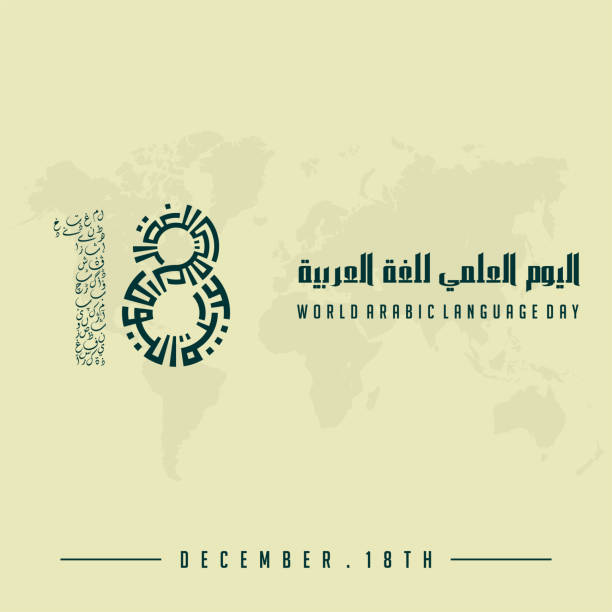
The journey of the Arabic language to this formal recognition within the halls of the United Nations was not a swift or simple one; it was the culmination of decades of dedicated diplomatic and cultural advocacy by Arab nations. The path began as early as 1954 when the UN General Assembly first permitted limited document translation into Arabic, albeit under restrictive conditions that capped pages and required requesting states to bear the cost . A significant milestone was reached in 1960 when UNESCO decided to use Arabic in regional conferences held in Arabic-speaking countries and to translate key documents. The language's role continued to expand gradually, with its formal adoption as a working language within UNESCO occurring in stages between 1966 and 1968. The decisive push came in the early 1970s, spearheaded by concerted diplomatic efforts from nations including Morocco, Saudi Arabia, Algeria, Egypt, and others, which ultimately led to the landmark General Assembly Resolution 3190. This resolution elevated Arabic to an official language of the General Assembly and its main committees, a status that was later extended to other UN bodies. The selection of December 18 for the annual World Arabic Language Day directly commemorates this historic decision, linking the celebration inextricably to the language's hard-won place in international discourse .
To appreciate the full significance of this day, one must first grasp the monumental scale and influence of the Arabic language itself. Arabic is a pillar of humanity's cultural diversity, spoken daily by well over 400 million people across the globe . Its reach extends far beyond the borders of the Arab world, with significant speaker communities in regions like the Horn of Africa, the Sahel, and historically, across the Silk Road routes. The language serves as the liturgical heart of Islam, the language of the Quran and daily prayer for nearly two billion Muslims worldwide, and it holds a key liturgical and literary position in several Christian churches within the Arab world. Its influence is also deeply embedded in other languages, having left an indelible mark on Persian, Turkish, Urdu, Spanish, Portuguese, and several African languages through centuries of trade, scholarship, and cultural exchange . This linguistic legacy is a testament to Arabic's historical role as a premier language of politics, science, and literature for many long centuries.
The intellectual and civilizational contributions of the Arabic language form the very core of its global celebration. UNESCO's themes for the day consistently highlight this legacy. Past themes, such as "The Contribution of the Arabic Language to Human Civilization and Culture," underscore its catalytic role as a bridge of knowledge . During the golden age of Islamic civilization, often referred to as a "Golden age of Arab culture," scholars working in Arabic undertook the monumental task of translating, preserving, critically engaging with, and expanding upon the scientific and philosophical works of ancient Greece and Rome. Figures like Ibn Sina (Avicenna) in medicine, Ibn al-Haytham in optics, and Al-Khwarizmi in mathematics (from whose name the term "algorithm" is derived) produced foundational texts in Arabic that would later be translated into Latin, becoming essential fuel for the European Renaissance. This transmission of knowledge was not passive preservation but active innovation, with Arab scholars making original breakthroughs that fundamentally advanced human understanding. The language thus served as the primary vehicle for a dialogue of cultures along the Silk Roads, facilitating the exchange of goods, ideas, and aesthetics from the coasts of India to the Horn of Africa and into Europe .
Beyond its scientific utility, the Arabic language has given rise to a breathtaking aesthetic tradition that is celebrated every year on this day. Its expressive power manifests in a fascinating array of forms, from the oral storytelling traditions of the hakawati and the profound depths of classical poetry to the intricate abstractions of philosophical prose . The unique structural nature of Arabic, built on a trilateral root system where words with shared meanings derive from a core set of three consonants, lends itself to immense creativity and rhetorical beauty. This is most visually and spiritually embodied in the art of Arabic calligraphy. Transcending mere writing, calligraphy is a sacred and artistic discipline where the word becomes image. Styles like the angular Kufic and the flowing Naskh are not just scripts but profound expressions of faith and artistry, adorning everything from monumental architecture and mosque domes to precious manuscripts and everyday objects. The language's intrinsic beauty, as celebrated by poets like Ahmed Shawqi who wrote of its unique charm residing in the letter "Dhad" (ض), is a central focus of the cultural performances and exhibitions that mark the Day.
World Arabic Language Day is not solely a retrospective glance at past glories; it is equally, and perhaps more urgently, a forward-looking engagement with the language's dynamic present and its future in a rapidly digitizing global society. Each year, UNESCO selects a contemporary theme to focus discussions and initiatives. In recent years, themes have powerfully connected Arabic to the modern world. The theme for 2024 was "Arabic Language and Artificial Intelligence (AI): Advancing Innovation While Preserving Cultural Heritage" . This theme directly addresses a critical challenge: despite Arabic's vast number of speakers, it remains underrepresented in the digital sphere, with a low percentage of online content available in the language. The day's forums explored how AI technologies such as sophisticated machine translation, natural language processing, and AI-powered tools for digitizing and analyzing historical manuscripts can help bridge this digital divide. These tools promise to make the Arabic web more robust, preserve fragile literary and historical texts, and enhance language education, all while ensuring the language's authentic character and rich heritage are safeguarded as it evolves . Previous themes have similarly focused on the intersection of Arabic with technology, media, and education, reflecting an ongoing commitment to ensuring the language's vitality and relevance for new generations.
The observance of the day itself is a multi-faceted international event. The flagship celebration is typically held at UNESCO Headquarters in Paris, featuring high-level roundtable discussions that bring together linguists, policymakers, technology experts, and academics . These discussions are complemented by rich cultural programs that might include live calligraphy demonstrations, musical and poetic performances, and film screenings, showcasing the living artistic traditions of the Arab world. The event also serves as a platform to honor contributions to Arab culture, such as through the UNESCO-Sharjah Prize for Arab Culture. These celebrations extend globally, with events organized at other UN offices, by member states, educational institutions, and cultural centers worldwide. The Day is supported by key partnerships, most notably the enduring support of the Sultan Bin Abdulaziz Al Saud Foundation and its programme for the Arabic language at UNESCO, which has been instrumental in funding projects and the annual celebration itself.
The Arabic language, in its essence, is a vast and intricate tapestry woven from threads of history, faith, science, art, and daily life. Its 28-letter alphabet, written from right to left, contains unique phonetic elements like the emphatic "Dhad" (ض) that contribute to its distinct sonority . Its grammatical precision and vast lexicon allow for nuances of expression that have sustained a literary tradition of unparalleled richness. World Arabic Language Day, therefore, is an invitation to the world to look beyond geopolitical headlines and perceive a civilization through its primary mode of expression. It is a day to acknowledge that the story of Arabic is, in significant measure, a story of human intellectual achievement. From the translation houses of Baghdad's House of Wisdom to the poetic courts of Andalusia, from the philosophical discourses of Ibn Rushd (Averroes) to the modern novels of Naguib Mahfouz, the language has been a constant vessel for human inquiry and creativity.
As we mark World Arabic Language Day each December 18, we do more than commemorate a historical UN resolution. We reaffirm a fundamental principle: that multilingualism and cultural diversity are not obstacles to global unity but its very prerequisites. In the words of UNESCO Director-General Audrey Azoulay, the day emphasizes "how much we need diverse perspectives – they are an invaluable treasure and the fundamental prerequisite for lasting peace". The Arabic language, with its deep roots and ever-evolving branches, offers one of humanity's most potent and beautiful perspectives. To celebrate it is to celebrate a key part of our shared human heritage, to promote dialogue over discord, and to ensure that this rich linguistic tradition continues to illuminate the path toward a more inclusive and understanding world for centuries to come.
Photo from: iStock

0 Comment to "UN Arabic Language Day: A Celebration of Linguistic Heritage, Cultural Diversity, and Global Dialogue at the United Nations."
Post a Comment