


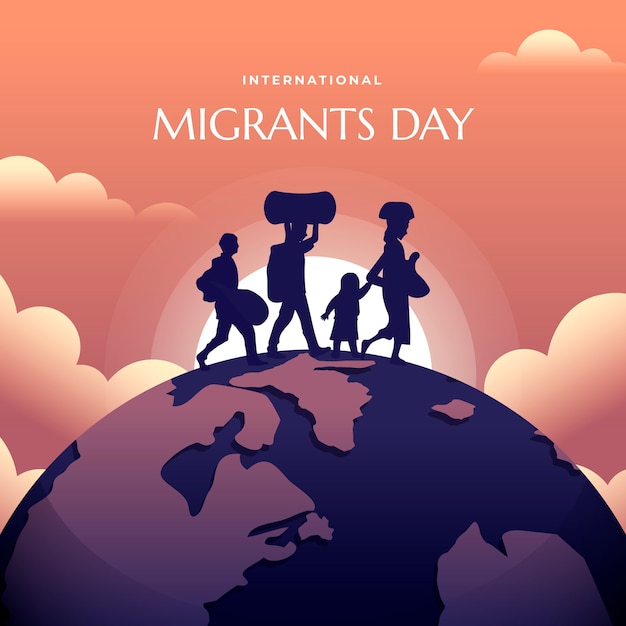
On December 18th of each year, the international community observes International Migrants Day, a United Nations-sanctioned day of global significance. This day is dedicated to recognizing the hundreds of millions of individuals who live outside their country of origin, honoring their immense contributions, advocating for the protection of their fundamental human rights, and fostering a more informed and compassionate dialogue on one of the defining phenomena of our time. The date was chosen to commemorate the adoption by the UN General Assembly, on December 18, 1990, of the landmark International Convention on the Protection of the Rights of All Migrant Workers and Members of Their Families. A full decade later, on December 4, 2000, building upon grassroots activism from migrant organizations worldwide, the General Assembly officially proclaimed 18 December as International Migrants Day. At its heart, this day serves as an annual global reminder of our shared humanity. As former UN Secretary-General Ban Ki-moon once stated, "Migration is an expression of the human aspiration for dignity, safety and a better future. It is part of the social fabric, part of our very make-up as a human family".
The Historical Foundations and Legal Backbone of the Day
The genesis of International Migrants Day is inextricably linked to the long and arduous struggle for the recognition of migrants' rights within the framework of international law. For much of modern history, migrants, particularly those in irregular situations or performing low-wage labor, have existed in a precarious space, often vulnerable to exploitation and excluded from the full protection of laws. The journey toward a dedicated international day began with a pivotal legal instrument. On December 18, 1990, the United Nations General Assembly adopted the International Convention on the Protection of the Rights of All Migrant Workers and Members of Their Families . This convention was a revolutionary document, affirming that all migrants, irrespective of their legal status, are entitled to a comprehensive set of human rights. It explicitly framed migrants not merely as economic units but as men, women, children, and families with inherent dignity.
However, the Convention's adoption did not immediately translate into widespread ratification or global awareness. Throughout the 1990s, migrant-led organizations and civil society groups, particularly in Asia, began to mark December 18 as a Day of Solidarity with Migrants. This grassroots movement, led by groups like Migrant Rights International, was crucial in pushing the issue onto the international agenda. Their advocacy highlighted the growing scale of migration and the acute vulnerabilities faced by migrants in transit and destination countries. This persistent civil society pressure culminated on December 4, 2000, when the UN General Assembly, acknowledging "the large and increasing number of migrants in the world," passed a resolution formally proclaiming 18 December as International Migrants Day. The proclamation was a diplomatic recognition that the phenomenon of migration required a cooperative global response centered on human rights. The UN invited all member states, intergovernmental bodies, and NGOs to observe the day by disseminating information on migrants' rights, sharing experiences, and undertaking action to ensure their protection. This established December 18 as both a commemoration of a legal milestone and a catalyst for ongoing advocacy, rooted in the lived experiences and activism of migrants themselves.
The Multifaceted Themes and Urgent Contemporary Significance
Each year, International Migrants Day is framed by a specific theme that focuses global attention on a particular dimension of the migration experience. These themes, often set by the International Organization for Migration (IOM), the UN's migration agency, guide events, discussions, and campaigns worldwide. For example, the theme for 2025 is "My Great Story: Cultures and Development," which seeks to personalize the global narrative . It emphasizes how individual migrant journeys collectively drive economic growth, enrich societies through cultural exchange, and help communities connect and support one another. This theme underscores the idea that migration is not a problem to be solved but a defining force of our century that, when managed well, is a powerful engine for sustainable development.
The day's significance is amplified by the staggering scale and complexity of contemporary migration. Current estimates indicate there are over 272 million international migrants globally, a figure that includes more than 41 million internally displaced persons . In the European Region alone, nearly 1 in 8 people is a migrant. These movements are driven by a confluence of powerful and often intersecting factors: protracted conflicts, the escalating impacts of the climate crisis, severe economic pressures, and profound inequality. Tragically, the past year has seen record levels of internal displacement and the highest-ever recorded death toll of migrants in transit. Furthermore, there is a concerning trend toward more restrictive and hardened migration policies in several regions, including the externalization of borders and practices that risk violating the principle of non-refoulement. In this context, International Migrants Day serves as a critical counterpoint a day to reject fear-based narratives and instead highlight stories of resilience, progress, and hope. It makes the urgent case that the challenges of migration are best met not with barriers and exclusion, but with smart policies, stronger cooperation, and a renewed commitment to making migration work for all.
The Profound Contributions of Migrants to Societies Worldwide
A central pillar of International Migrants Day is the celebration of the profound and multifaceted contributions migrants make to both their host and home countries. These contributions fundamentally challenge negative stereotypes and illustrate that migration, when supported by fair policies, creates a "win-win" scenario for societies . Economically, migrants are indispensable drivers of growth. They fill critical labour shortages in key sectors from healthcare and technology to agriculture and services often taking on jobs that are essential yet difficult to fill locally. They are powerful agents of innovation and entrepreneurship, starting new businesses at high rates and bringing fresh perspectives that fuel competitiveness. In aging societies, migrants help address demographic challenges by expanding the workforce and supporting pension systems. Crucially, they complement rather than simply compete with native-born workers, allowing economies to specialize and grow.
The economic lifeline extended to countries of origin through remittances is another monumental contribution. These financial transfers from migrants to their families are a cornerstone of development, projected to reach a record $685 billion in low- and middle-income countries . This flow of capital often exceeds official development aid, directly reducing poverty, funding education and healthcare, and stimulating local economies. Beyond economics, the socio-cultural contributions are immeasurable. Migrants enrich the social fabric of their new communities by introducing diverse traditions, arts, cuisines, and viewpoints. This cultural exchange fosters dynamism and creativity. The theme of "My Great Story" encapsulates this, recognizing that every migrant brings a narrative that becomes woven into the broader story of a community's development. As the Caritas Internationalis statement poignantly notes, migrants often arrive as "messengers of hope," and the communities that welcome them can, in turn, become a living testament to hope and shared dignity. Ultimately, International Migrants Day asks us to envision "A Day Without Migrants," a thought experiment that reveals how essential migrants are to the functioning of hospitals, farms, tech companies, and neighbourhoods around the world .
Global Observance: From Policy Dialogues to Personal Stories
The observance of International Migrants Day is a truly global undertaking, manifesting in a rich tapestry of events organized by UN agencies, national governments, municipalities, museums, faith-based groups, and countless civil society organizations. The International Organization for Migration (IOM), with operations in over 171 countries, plays a leading role in coordinating and promoting activities . These observances range from high-level policy forums to deeply personal community gatherings, all aimed at shifting perceptions and promoting rights-based governance. A flagship event in recent years has been the Global Migration Film Festival (GMFF), organized by IOM. This festival features screenings of migration-themed films and documentaries in over 100 countries, culminating in a gala event on December 18th . The power of cinema to foster empathy and understanding makes this a cornerstone of the day's advocacy.
Simultaneously, cultural and educational institutions use the day to engage the public on a human level. The Migration Museums Network, for instance, has coordinated virtual activities exploring the intimate connection between food, migration, and memory . Activities like sharing traditional recipes, hosting cooking demonstrations, and discussing "food memories" showcase how culinary traditions serve as a vital link to heritage and a bridge to new communities. Museums from Australia to France to the United States hold webinars, launch digital exhibitions, and share object stories that highlight migrant experiences often absent from mainstream historical narratives. For faith communities, the day holds deep moral significance. Organizations like Caritas Internationalis use it to issue calls to action, urging governments to design regular and safe migration pathways and to implement policies centered on human dignity rather than national security alone. They ground this advocacy in spiritual teachings, such as the biblical injunction, "I was a stranger, and you welcomed me". At the grassroots level, NGOs and community groups host workshops, press conferences, fundraisers, and "Tweet storms" to raise awareness about local campaigns and the need for just immigration reform . This multilayered observance from the global to the local, from the political to the personal ensures International Migrants Day resonates across all sectors of society.
The Unfinished Agenda: Protection, Health, and the Path Forward
Despite the progress marked by International Migrants Day, a substantial unfinished agenda remains, underscoring the day's role as a call to action rather than just a celebration. The foundational Migrant Workers Convention of 1990, while a critical tool, has only been ratified by 55 countries, leaving gaps in the legal protection for millions . Key challenges persist, including the growing uncertainty and precarity for people on the move, who often face systems rife with administrative barriers, discrimination, and risk of exploitation. A paramount concern is the health and well-being of migrants. The World Health Organization (WHO) emphasizes that protecting migrant health is essential for social cohesion and resilient health systems. Yet, migrants frequently encounter formidable obstacles to care: legal and administrative restrictions, language and cultural barriers, and limited continuity of care. In response, WHO/Europe has adopted a Regional Action Plan for Refugee and Migrant Health (2023–2030), focusing on priorities like ensuring universal health coverage and building migrant-inclusive health systems. The fact that migrants themselves, including countless doctors and nurses, form an essential part of the health workforce makes addressing these barriers both a moral and practical imperative.
The path forward, as advocated for on International Migrants Day, is framed by international cooperation frameworks like the Global Compact for Safe, Orderly and Regular Migration, adopted by 164 countries in 2018 . This non-binding agreement represents a shared roadmap for managing migration humanely and cooperatively. The day's observances consistently call for its full implementation, alongside concrete actions such as creating more alternative pathways for regular migration, regularization programs for those already in host countries, and where possible, clear paths to citizenship. These measures are positioned not as concessions but as strategic investments that weaken criminal smuggling networks, empower migrants to contribute fully, and strengthen social cohesion. Ultimately, International Migrants Day reminds us that the goal is to build a world where migration is not born of desperation but of choice, and where every person on the move is treated with the dignity, safety, and respect that is their inherent human right. It is a day to reaffirm that the story of migration is, in the end, a shared human story, and its future will be written by the policies we enact and the empathy we choose to practice every day.
Photo from : Freepik

0 Comment to "International Migrants Day: A Global Recognition of Human Mobility, Rights, and Contributions Across Societies"
Post a Comment