


Tanzania's Independence Day on December 9th, commemorating the end of British rule in Tanganyika in 1961, is more than a historical date; it is a profound national narrative woven from the threads of foreign domination, visionary leadership, and the enduring quest for sovereignty and unity. This day, known in Swahili as "Siku ya Uhuru," represents the culmination of a specific anti-colonial struggle and the foundational moment for modern Tanzanian identity, setting it apart from many other African nations through its remarkably peaceful transition and its subsequent path of African socialism and regional federation .
The Historical Crucible: From Colonial Chessboard to National Consciousness
To understand the significance of December 9, 1961, one must first grasp the complex colonial history that preceded it. The mainland's modern political shape began not with Britain but with Germany. In the late 19th century, the territory became part of German East Africa, a colony where brutal suppression met local resistance, most notably in the Maji Maji Rebellion of 1905-1907 . Germany developed the colony through plantations and infrastructure, such as the Central Railway, but its rule was characterized by forced labor and harsh discipline .
Germany's defeat in World War I redrew the map of Africa. Under the 1919 Treaty of Versailles, German East Africa was dismantled. The largest portion, entrusted to Britain under a League of Nations mandate, was renamed the Tanganyika Territory . British rule, which lasted over four decades, was distinct in its intent. Initially, administrators envisioned Tanganyika as a "Black man's country," and they implemented a system of indirect rule through local chiefs. The economy remained anchored in cash crops like sisal, coffee, and cotton, primarily for export. A significant social legacy of this period was the growth of the Asian community primarily from the Indian subcontinent who were brought in for administrative and commercial roles, creating a three-tier racial social structure of Europeans, Asians, and Africans. Following World War II, Tanganyika's status shifted from a League mandate to a United Nations Trust Territory, still under British administration but with an explicit international obligation to prepare it for self-government . It was within this framework that the momentum for independence became irresistible.
The Peaceful Revolution: TANU, Nyerere, and the Path to Uhuru
The movement for independence was distinct for its organized, largely non-violent character, a direct reflection of its primary architect, Julius Kambarage Nyerere, affectionately known as Mwalimu (the teacher). In 1954, Nyerere and others transformed the Tanganyika African Association into the Tanganyika African National Union (TANU) . TANU's genius was its broad-based appeal. It transcended the ethnic divisions that complicated nationalist movements in neighboring countries by focusing squarely on the universal goal of "Uhuru na Umoja" (Freedom and Unity). Nyerere's moderate, inclusive philosophy assured European and Asian minorities that they had a place in an independent Tanganyika, which helped isolate extremist opposition .
TANU's political dominance was demonstrated decisively in the country's first elections in 1958-59, where it won every seat . By 1960, Nyerere became Chief Minister, and the final constitutional talks for independence were set. Unlike the violent Mau Mau uprising in Kenya or the political turmoil in Uganda, Tanganyika's journey was marked by negotiation and constitutional progress. Consequently, when the Tanganyika Independence Act received royal assent in London in November 1961, it set the stage for a peaceful transfer of power .
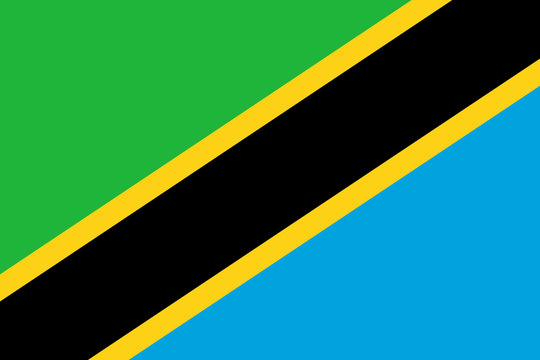
On the night of December 8, 1961, the atmosphere at the National Stadium in Dar es Salaam was electric. As the clock struck midnight, the British flag was lowered for the final time. In its place rose the new flag of Tanganyika: black, symbolizing the people; green, for the land; and gold, for mineral wealth. Prince Philip, representing Queen Elizabeth II, formally handed the instruments of independence to Prime Minister Julius Nyerere . In a powerful symbolic act, the Uhuru Torch was lit on Mount Kilimanjaro, Africa's highest peak, signifying freedom illuminating the nation and the continent. The new nation began as a Commonwealth realm with the British monarch as titular head, but this was always a transitional phase. Exactly one year later, on December 9, 1962, Tanganyika cut its final constitutional tie to Britain, becoming a republic with Nyerere as its first executive president.
From Tanganyika to Tanzania: The Fulfillment of "Umoja"
Independence was not the end of the story but the beginning of a new, audacious chapter. In 1964, a series of events transformed the nation's geography and identity. In January, a violent revolution overthrew the Arab Sultanate in Zanzibar, a neighboring island archipelago that had gained independence from Britain just a month earlier under a different government . The new revolutionary government in Zanzibar sought a union with the mainland. For Nyerere, this was the perfect opportunity to realize the "Umoja" part of TANU's slogan, fearing instability on the island could invite Cold War proxy conflict .
On April 26, 1964, the two sovereign states the Republic of Tanganyika and the People's Republic of Zanzibar merged to form the United Republic of Tanganyika and Zanzibar. The name was changed to the United Republic of Tanzania later that October . "Tanzania" was a portmanteau of Tan (Tanganyika) and Zan (Zanzibar). This union, unique in Africa, created a country with a complex dual-government structure, where Zanzibar retains significant autonomy over its internal affairs. December 9 remained the national Independence Day for the union, commemorating the mainland's Uhuru, while Zanzibar marks its own revolution day on January 12.
Nyerere's Project: Ujamaa and Tanzania on the World Stage
With the union solidified, President Nyerere embarked on an ambitious project of nation-building guided by a unique political philosophy. In 1967, he issued the Arusha Declaration, which outlined the principles of Ujamaa (familyhood), a form of African socialism . Ujamaa advocated for self-reliance, collective village-based agriculture, and nationalization of key industries like banks and major companies. It rejected capitalist exploitation and aimed to create a classless society rooted in traditional African communal values. While the policy fostered a strong sense of national identity and made impressive strides in literacy and healthcare, its economic prescriptions, particularly the forced villagization program, ultimately stifled agricultural productivity and contributed to economic stagnation by the 1980s .
On the international stage, Nyerere became a towering figure. He was a leading voice of the Non-Aligned Movement, skillfully navigating the Cold War by accepting aid from both Eastern and Western blocs to build critical infrastructure, most famously the Tazara Railway linking Dar es Salaam to Zambia, built with Chinese assistance . He was also a committed pan-Africanist and a fierce opponent of colonialism and apartheid, offering support to liberation movements across Southern Africa. Tanzania's foreign policy often reflected a strong moral stance, sometimes straining relations, as when Nyerere severed ties with Britain over its policy toward Rhodesia .
The Meaning of Celebration: From National Ritual to Contemporary Reflection
Traditionally, Independence Day in Tanzania is a vibrant national holiday marked by formal and popular celebrations. The focal point is a major ceremony, often in the capital, Dodoma, or the commercial hub, Dar es Salaam, featuring a presidential address, a military parade, and cultural performances from various ethnic groups . Schools and communities hold smaller events, songs, and speeches, reinforcing the national narrative of struggle and unity. The Uhuru Torch remains a central symbol, with a relay carrying a flame lit on Mount Kilimanjaro across the country, embodying the spirit of freedom and progress .
However, the commemoration is not static; it reflects the nation's contemporary political climate. In recent years, the day has also become a moment for political reflection and dissent. For instance, in 2025, the government under President Samia Suluhu Hassan canceled official celebrations, redirecting funds to repair infrastructure damaged during post-election unrest . Authorities also warned citizens to stay home, citing security concerns ahead of planned opposition protests calling for accountability for alleged human rights abuses. This tension highlights how Independence Day serves not only as a state ritual but also as a contested space where the ideals of freedom and unity are measured against current political realities.
Tanzania's Independence Day is a living history. It commemorates the precise moment Tanganyika emerged from British trusteeship, but its true meaning encompasses the entire journey—from German colonization through British administration, through the peaceful activism of TANU, to the visionary but challenging leadership of Nyerere, and finally to the bold experiment of union with Zanzibar. It is a day to celebrate the achievement of Uhuru, to reflect on the ongoing project of Umoja, and to debate the realization of the justice and equality promised on that night in December 1961. The flag raised that night symbolizes a nation forever shaped by its past and continuously striving to define its future.
Photo from: Adobe Stock
0 Comment to "Celebrating Tanzania's Independence Day: From Tanganyika's 1961 Freedom to National Unity and Legacy"
Post a Comment