


The Admission of Siam and Japan to the United Nations: A Comprehensive History of Security Council Resolutions 13 (1946) and 121 (1956)
The United Nations Security Council (UNSC) resolutions concerning the admission of new member states during the early Cold War period offer fascinating insights into the geopolitical dynamics of the time. Two such resolutions—Resolution 13 in 1946 recommending the admission of Siam (now Thailand) and Resolution 121 in 1956 recommending the admission of Japan—represent critical milestones in the expansion of the United Nations and the integration of Asian nations into the post-World War II international order. These admissions occurred at different stages of the Cold War and under markedly different circumstances, yet both reflected the complex interplay of global power politics, regional dynamics, and the evolving criteria for UN membership. This comprehensive analysis examines the historical context, political negotiations, and lasting implications of these two landmark decisions that welcomed important Asian nations into the international community during a transformative period of global history.
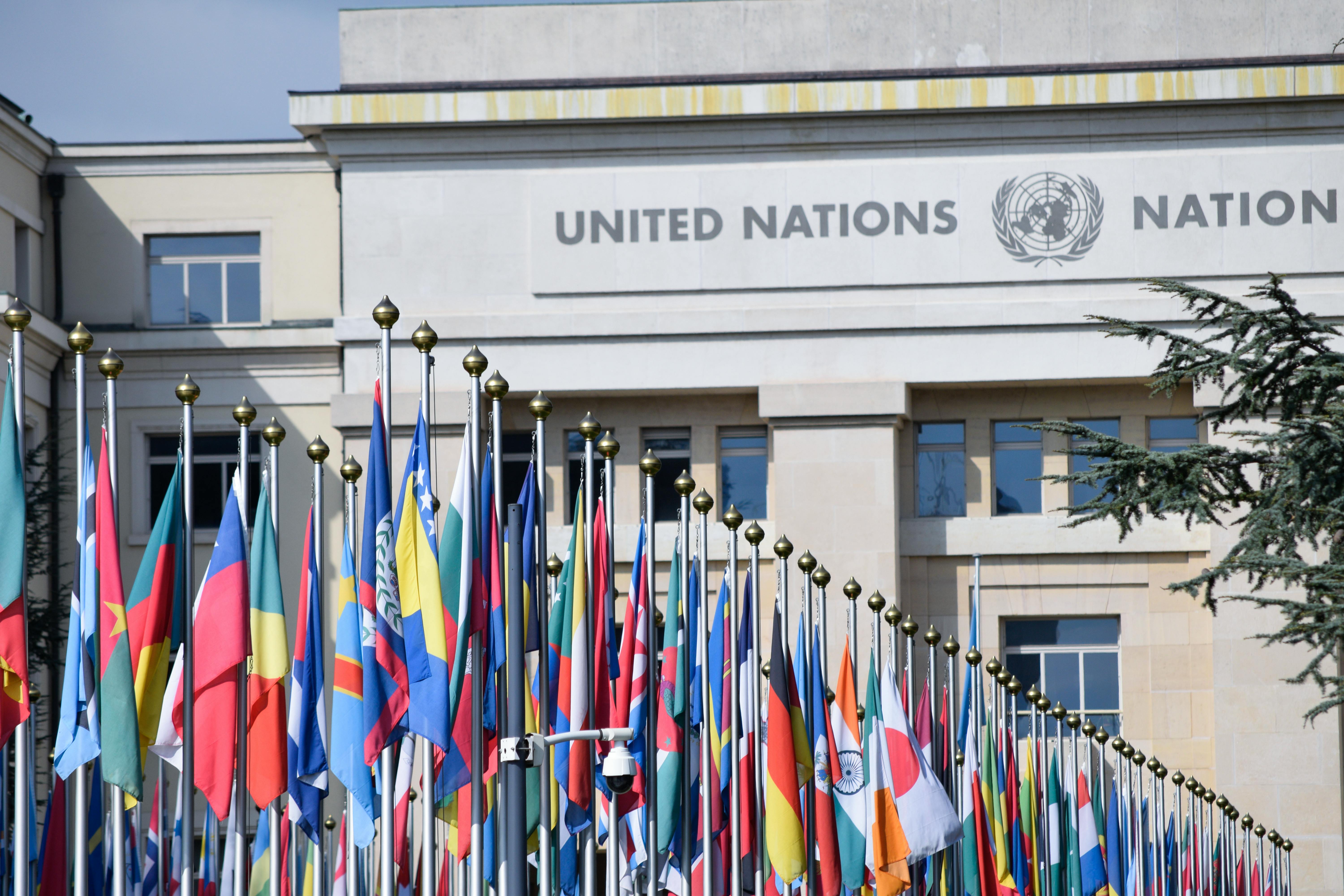
The process of admission to the United Nations follows a specific protocol outlined in Article 4 of the UN Charter: applicants must be peace-loving states that accept the obligations of the Charter and are able and willing to carry them out. Admission requires a recommendation from the Security Council, where it must obtain at least nine affirmative votes with no veto from any of the five permanent members, followed by a two-thirds majority vote in the General Assembly. This dual-track process inherently politicized membership decisions, especially during the Cold War when the United States and Soviet Union frequently used UN admissions to advance their competing ideological agendas. The admissions of Siam and Japan, separated by exactly a decade, occurred against this backdrop of superpower rivalry, with Resolution 13 coming in the immediate aftermath of World War II and Resolution 121 emerging during a more complex period of Cold War tensions in Asia.
Historical Context of UN Security Council Resolution 13 (1946): Siam's Admission
Siam's Political Status and Wartime Position
In 1946, Siam stood at a political crossroads as it sought to establish its place in the post-World War II international order. The country's wartime experience was complex—it had signed a treaty of friendship with Japan in December 1941 and declared war on the United States and United Kingdom in January 1942, but also maintained an underground resistance movement (Seri Thai) that cooperated with Allied forces. Following Japan's surrender, Siam quickly nullified its wartime declarations and agreements, positioning itself as a nation that had been coerced into collaboration. This strategic recalibration was crucial for its international rehabilitation and subsequent UN membership bid. Unlike many Asian nations that were emerging from colonial rule, Siam maintained its status as the only Southeast Asian country never formally colonized, giving it a unique position as it navigated the post-war political landscape.
The political transition within Siam further facilitated its UN aspirations. In June 1946, young King Ananda Mahidol was found dead under mysterious circumstances, leading to the ascension of his brother, King Bhumibol Adulyadej, who would become the world's longest-reigning monarch. Although the new king was only 18 years old and studying in Switzerland at the time of his accession, his eventual reign would come to symbolize Thailand's modernization and international engagement. More immediately relevant to the UN admission process was the appointment of Prince Wan Waithayakon, a seasoned diplomat who would become Thailand's first ambassador to the United Nations and later serve as President of the UN General Assembly in 1956-57.
The Security Council Debate and Voting Process
The Security Council's consideration of Siam's application occurred against the backdrop of broader discussions about post-war UN expansion. In August 1946, the Council had already recommended Afghanistan, Iceland, and Sweden for admission through Resolution 8, establishing a pattern of considering multiple applications together. Siam's application was addressed separately several months later, reflecting perhaps the unique timing of its submission or the specific considerations surrounding its wartime record.
According to Security Council records, the 83rd meeting on December 12, 1946, focused specifically on Siam's application. The discussion was notably brief compared to debates surrounding other applicants, suggesting a relative lack of controversy about Siam's qualifications. The United States, having accepted Siam's renunciation of its wartime declarations, supported the admission, as did other Western powers. Significantly, the Soviet Union—which had frequently used its veto power to block admissions of states it viewed as aligned with Western interests—raised no objections to Siam's application. This unanimous support may have reflected Siam's positioning as a neutral Asian state rather than an unequivocal member of either Cold War bloc.
The voting result was definitive: 11 votes in favor, 0 against, 0 abstentions. The Security Council members at that time consisted of the five permanent members (China, France, the Soviet Union, the United Kingdom, and the United States) and six non-permanent members (Australia, Brazil, Egypt, Mexico, the Netherlands, and Poland). The absence of any opposition from the Soviet bloc was particularly noteworthy given that just months earlier, the Soviet representative Andrei Gromyko had opposed the en bloc admission of several states including Ireland, Portugal, and Transjordan (Jordan), arguing that these countries had no diplomatic relations with the USSR .
Immediate Aftermath and Formal Admission
Following the Security Council's recommendation, the General Assembly took up the matter at its 67th plenary meeting on December 15, 1946. With the Security Council's unanimous endorsement, the Assembly vote was essentially a formality, though it still required a two-thirds majority. The Assembly adopted the resolution admitting Siam to the United Nations, and the country formally became a member on December 16, 1946, joining the original 51 founding members along with Afghanistan, Iceland, and Sweden which had been admitted in November.
Prince Wan Waithayakon presented his credentials as Thailand's first Permanent Representative to the United Nations on April 29, 1947, a date noted in The New York Times with the headline "SIAM JOINS UP". This marked Thailand's formal entry into the international diplomatic community under its new constitutional monarchy system. The country's admission represented not only its post-war rehabilitation but also the beginning of what would become a long and active engagement with the United Nations system, including eventual service on the Security Council in 1985-86 and hosting numerous UN regional offices in Bangkok.
The Decade-Long Journey to UN Security Council Resolution 121 (1956): Japan's Admission
Japan's Post-War Status and Road to Sovereignty
Japan's path to UN membership was considerably more complex and protracted than Thailand's, reflecting its unique position as a defeated Axis power under Allied occupation. Following its surrender in September 1945, Japan remained under the administration of the Supreme Commander for the Allied Powers (SCAP) headed by General Douglas MacArthur until the signing of the San Francisco Peace Treaty in September 1951. This treaty, which came into effect in April 1952, formally ended the occupation and restored Japan's sovereignty, though with significant limitations on its military capabilities. The treaty specifically encouraged Japan to seek UN membership, stating that "Japan declares its readiness to apply for membership in the United Nations".
Despite this endorsement, Japan's application faced immediate geopolitical obstacles rooted in Cold War tensions. The United States, as Japan's principal occupying power and post-war ally, strongly supported Japan's UN membership as part of its strategy to integrate rehabilitated former enemies into the Western bloc. However, the Soviet Union which had signed the peace treaty but maintained frosty relations with Japan viewed the matter through the prism of Cold War calculus. The USSR had its own strategic interests in Asia, including territorial disputes with Japan over the Kuril Islands and a desire to counter what it perceived as American efforts to create a network of anti-communist allies in the region.
Geopolitical Obstacles and the 1955 Veto
Japan formally applied for UN membership in 1952, shortly after regaining its sovereignty. The United States promptly endorsed the application, beginning what would become a four-year diplomatic struggle to secure Japan's admission. The complexity of the situation became apparent in 1955 when the Security Council considered a package of 18 membership applications, including Japan's. At that time, the United States and its allies supported the admission of all 18 candidates, but the Soviet Union objected to several, including the Republic of China (Taiwan), which held China's Security Council seat at that time, opposed the admission of the Mongolian People's Republic.
This created a diplomatic standoff with significant implications for Japan's application. The Soviet Union, in what appeared to be a tactical maneuver, proposed that Japan and Mongolia be admitted together as a package. When this proposal was put to a vote, it received only one vote in favor (from the USSR itself), with the other 10 Security Council members abstaining. Subsequently, when Japan's application was considered separately, the Soviet Union exercised its veto power, blocking Japan's admission while citing the unresolved Mongolian question. This marked a clear example of how admission to the UN had become entangled in broader Cold War politics, with membership applications serving as bargaining chips in larger geopolitical negotiations.
The dynamics within the Security Council during this period reflected the intensifying Cold War divisions. By 1955, the Council's composition included both Western-aligned states and those from the Soviet bloc, creating an environment where virtually any substantive issue could become polarized along ideological lines. Japan's application suffered from its close association with the United States through their security alliance and the ongoing U.S. military presence in Japan, which the Soviet Union consistently criticized as evidence of Japan's lack of independent foreign policy.
The Breakthrough and Unanimous Adoption
The diplomatic impasse over Japan's UN membership continued throughout 1956, even as Japan normalized relations with several Soviet bloc countries. The crucial breakthrough came through bilateral negotiations between Japan and the Soviet Union, culminating in the Joint Declaration of October 19, 1956, which restored diplomatic relations between the two countries. Although this declaration did not resolve all outstanding issues (particularly the territorial dispute over the Northern Territories/Kuril Islands), it created sufficient political space for the Soviet Union to drop its opposition to Japan's UN membership.
With this bilateral obstacle removed, the Security Council took up Japan's application once again at its 756th meeting on December 12, 1956 exactly ten years to the day after it had recommended Siam's admission. The contrast with the contentious 1955 debate was stark: this time, the Council unanimously adopted Resolution 121, with 11 votes in favor and none against or abstaining. The resolution itself was notably concise, stating simply: "The Security Council, having examined the application of Japan, recommends to the General Assembly that Japan be admitted to membership in the United Nations".
This unanimous endorsement reflected the evolving geopolitical landscape of 1956, a year marked by significant Cold War developments including Khrushchev's "secret speech" denouncing Stalin, the Polish October, and the Hungarian Revolution. Against this backdrop of both thaw and crisis in East-West relations, Japan's admission represented a rare point of consensus. The General Assembly formally admitted Japan on December 18, 1956, completing a process that had taken more than four years since Japan's initial application and over a decade since the end of the war.
Comparative Analysis: Resolution 13 vs. Resolution 121
Table: Comparative Analysis of UN Security Council Resolutions 13 and 121
| Aspect | Resolution 13 (1946) - Siam/Thailand | Resolution 121 (1956) - Japan |
|---|---|---|
| Voting Result | 11-0-0 (unanimous) | 11-0-0 (unanimous) |
| Meeting Number | 83rd meeting | 756th meeting |
| Date Adopted | December 12, 1946 | December 12, 1956 |
| Time from Application to Recommendation | Approximately 4 months | Over 4 years |
| Major Obstacles | Wartime collaboration record | Cold War politics, Soviet veto |
| Key Advocates | United States, United Kingdom | United States, Western allies |
| Opposition | None | Soviet Union (until 1956) |
| Post-Admission Significance | First Southeast Asian member | Major Asian power rehabilitation |
The parallel dates of December 12 for both resolutions—exactly a decade apart—create a striking historical symmetry, but the contrasting journeys to admission reveal much about the evolving UN membership process during the early Cold War. Thailand's admission was relatively straightforward, occurring in the immediate post-war period when the United Nations was still defining its membership criteria and processes. Japan's admission, by contrast, became entangled in the mature Cold War dynamics of the 1950s, where Security Council vetoes had become a regular instrument of superpower competition.
The geopolitical contexts differed significantly. In 1946, the Cold War was still in its formative stages, and the Soviet Union had not yet established its pattern of frequently using the veto (the first Soviet veto would come in 1946 on a different matter). By 1956, the Security Council had become a primary arena for U.S.-Soviet confrontation, with 80 vetoes cast since 1946, the majority by the Soviet Union. Japan's admission required bilateral diplomacy between Tokyo and Moscow to overcome what was essentially a proxy conflict within the larger Cold War, whereas Thailand faced no such superpower opposition.
Another key difference lay in the post-war status of the two applicants. Thailand, despite its wartime alliance with Japan, successfully presented itself as a coerced collaborator that had maintained an active resistance movement. Japan, as the principal defeated aggressor in Asia, carried greater historical baggage and faced more scrutiny regarding its post-war transformation into a peaceful democracy. This difference was reflected in the timing: Thailand joined the UN just 16 months after the war's end, while Japan waited over 11 years.
Thailand and Japan in the United Nations: Post-Admission Trajectories
Thailand's Multifaceted UN Engagement
Following its admission, Thailand developed into what the Thai government would later describe as a "committed member" of the United Nations system . The country's engagement spanned multiple dimensions of UN work, establishing a pattern of active participation that continues to this day. In 1956—the same year Japan was admitted Prince Wan Waithayakon served as President of the UN General Assembly, demonstrating how quickly Thailand had established itself within UN diplomatic circles.
Thailand's contributions to UN peacekeeping operations have been particularly significant. Since first participating in 1950, Thailand has contributed over 20,000 personnel to more than 20 UN peacekeeping missions worldwide, including operations in Cambodia, Timor-Leste, Burundi, and Sudan. This commitment reflects Thailand's foreign policy emphasis on conflict prevention and peacebuilding, which it views as more effective and less costly than military intervention.
Beyond peacekeeping, Thailand has played an important role in several specialized areas of UN work. The country was one of the first 48 nations to endorse the Universal Declaration of Human Rights in 1948, just two years after joining the UN. More recently, Thailand proposed the "Bangkok Rules" officially the United Nations Rules for the Treatment of Women Prisoners and Non-custodial Measures for Women Offenders which were adopted by the General Assembly in 2010. Thailand has also served on the UN Human Rights Council (2010-2013) and hosted numerous UN agencies, including the regional headquarters of UNESCAP (UN Economic and Social Commission for Asia and the Pacific) in Bangkok.
Japan's Evolution into a Major UN Contributor
Japan's post-admission trajectory within the United Nations reflects its remarkable transformation from a defeated aggressor to one of the organization's most significant supporters. After joining in 1956, Japan initially maintained a relatively low profile in UN affairs, consistent with its Yoshida Doctrine of focusing on economic development while avoiding major political or military international engagements. This began to change in the 1970s as Japan's economic power grew, culminating in its election as a non-permanent member of the Security Council for the first time in 1978.
Japan's most substantial contribution to the UN has been financial. For decades, Japan was the second-largest contributor to the UN regular budget after the United States, typically providing between 8-10% of the total budget. Japan has also been a major donor to UN development and humanitarian agencies, reflecting its emphasis on "human security" as a foreign policy priority. This financial support has given Japan significant influence within the UN system, though it has consistently expressed frustration at not having a permanent seat on the Security Council commensurate with its contributions .
In the realm of peacekeeping, Japan's participation has been more limited and controversial due to constitutional restrictions on military deployments abroad. However, since the 1990s Japan has gradually expanded its involvement in UN peace operations, primarily through non-combat roles such as engineering, medical support, and reconstruction. Japan's comprehensive approach to peacebuilding combining security, development, and humanitarian assistance has influenced UN thinking on post-conflict recovery.
Strategic Significance and Lasting Implications
The admissions of Thailand and Japan to the United Nations held strategic significance that extended far beyond the mere expansion of UN membership rolls. For Thailand, admission represented international rehabilitation and validation of its post-war political direction. By becoming one of the first new members admitted after the UN's founding, Thailand secured an early place in the post-war international order that would facilitate its subsequent economic development and diplomatic influence in Southeast Asia. Thailand's admission also had regional implications, as it became a non-communist Asian state within a UN that would soon grapple with decolonization and Cold War conflicts across Asia.
For Japan, UN membership was a crucial component of its post-war normalization. Beyond the symbolic importance of being readmitted to the community of nations, UN membership provided Japan with a multilateral framework through which to pursue its foreign policy goals while managing the constraints of its pacifist constitution. The decade-long struggle for admission highlighted the persistent divisions of the early Cold War, while the eventual unanimous vote in 1956 suggested possibilities for superpower consensus even amid ongoing tensions. Japan's experience also demonstrated how bilateral diplomatic initiatives (in this case, with the Soviet Union) could break logjams in multilateral forums.
Both admissions reflected the evolving nature of UN membership criteria and processes. In 1946, the Security Council was still developing its procedures for evaluating applicants, with debates focusing largely on technical compliance with Charter provisions. By 1956, membership decisions had become thoroughly politicized, with the permanent members—especially the United States and Soviet Union using admissions as instruments of their broader foreign policies. This evolution foreshadowed the even more contentious membership debates that would occur during the period of decolonization, when dozens of newly independent states sought UN membership .
The broader impact of these admissions on Asian regional dynamics was substantial. Thailand's early membership helped establish it as a regional hub for UN activities in Southeast Asia, while Japan's belated admission marked the beginning of its transformation into a major multilateral actor. Together, these two admissions represented important steps in the global integration of Asian states following the disruptions of World War II and during the polarized atmosphere of the Cold War. Their contrasting paths to membership one relatively smooth, the other protracted and contentious illustrate how the specific historical circumstances of each nation intersected with the geopolitical currents of their time to shape their entry into the international community.
Conclusion: Legacy and Continuing Relevance
The stories of UN Security Council Resolutions 13 and 121, though separated by a decade and arising from very different national circumstances, together illuminate the complex dynamics of international organization membership during the formative years of the United Nations. Thailand's admission in 1946 represented the relatively straightforward integration of a strategically positioned Southeast Asian nation seeking to establish its place in the post-war order. Japan's admission in 1956, by contrast, required navigating the treacherous waters of Cold War politics and bilateral diplomacy with a former adversary turned geopolitical obstacle.
The enduring legacies of these admissions continue to shape international relations in Asia and beyond. Thailand has leveraged its early UN membership to become an active participant across the UN system, from peacekeeping to human rights to development. Japan has transformed from a contested applicant into one of the UN's most important stakeholders, despite continuing to seek Security Council reform that would grant it permanent membership. Both nations exemplify how states can use UN membership as a platform for international engagement and the pursuit of national interests within a multilateral framework.
The historical significance of these resolutions extends beyond the specific cases of Thailand and Japan. They represent critical moments in the evolution of the United Nations as it navigated the transition from wartime alliance to permanent international organization while contending with the emerging divisions of the Cold War. The unanimous votes for both resolutions despite their very different paths to that unanimity demonstrate that even during periods of profound international tension, the universal aspiration represented by UN membership could occasionally transcend geopolitical rivalries.
As the United Nations continues to grapple with questions of membership, representation, and reform in the 21st century, the experiences of Thailand and Japan offer valuable historical perspective. They remind us that the admission of new members to international organizations is never merely a technical or bureaucratic process, but rather a deeply political one that reflects the distribution of power, the nature of international conflicts, and the evolving understanding of sovereignty and community in the global system. The contrasting journeys of these two Asian nations into the United Nations, captured in those two December 12 resolutions a decade apart, continue to resonate as compelling case studies in the ongoing story of international cooperation and contestation.
Photo from: Pexels
0 Comment to "UNSC Resolution 13 (1946) and Resolution 121 (1956): The Post-War Admissions of Siam and Japan to the United Nations"
Post a Comment