


International Day of Persons with Disabilities 2025 Advances Global Social Progress Through Inclusive Societies
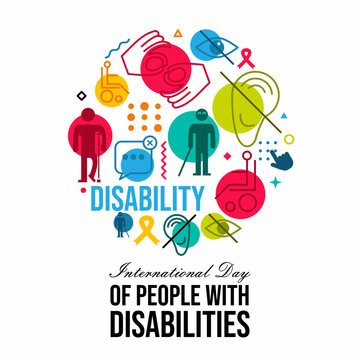
The International Day of Persons with Disabilities (IDPD), observed every year on December 3rd, stands as a cornerstone moment for global reflection and action on disability rights. From its origins in the 1980s to the ambitious global frameworks of today, this day serves not as a singular event but as a critical milestone in the continuous journey toward full inclusion. In 2025, the observance carries a potent and timely theme: "Fostering disability inclusive societies for advancing social progress." This theme underscores a foundational truth—that genuine societal advancement is impossible when one-sixth of humanity, an estimated 1.3 billion people with disabilities, continues to face profound barriers to their rights and participation. The day is dedicated to promoting an understanding of disability issues and mobilizing support for the dignity, rights, and well-being of persons with disabilities .
The Historical Foundation of a Global Observance
The International Day of Persons with Disabilities is the culmination of decades of advocacy and international consensus-building. Its roots can be traced back to 1976 when the United Nations General Assembly proclaimed 1981 as the International Year of Disabled Persons . The theme, "Full Participation and Equality," established a revolutionary benchmark, framing disability as a societal issue of rights and inclusion rather than one of individual medical condition. This pivotal year was followed by the United Nations Decade of Disabled Persons from 1983 to 1992, providing a structured timeframe for governments and organizations to implement the World Programme of Action. It was at the close of this decade, in 1992, that the UN General Assembly formally proclaimed December 3rd as the annual International Day of Disabled Persons, later refined to its current title, the International Day of Persons with Disabilities, in 2007 . This historical trajectory, from a dedicated year to a decade of action and finally to an enduring annual observance, reflects the growing international recognition that the inclusion of persons with disabilities is a permanent, cross-cutting imperative for just and equitable societies.
The day has been marked by evolving annual themes that mirror the shifting priorities of the global disability movement and its alignment with broader development goals. Recent themes, such as "Transformative Solutions for Inclusive Development" (2022) and "United in Action to Rescue and Achieve the SDGs" (2023), have explicitly linked disability inclusion to the achievement of the Sustainable Development Goals (SDGs) . This is significant because the 2030 Agenda for Sustainable Development pledges to leave no one behind, a promise that cannot be kept without the full inclusion of persons with disabilities in all 17 goals, particularly in quality education (SDG 4), decent work (SDG 8), reduced inequalities (SDG 10), and building sustainable communities (SDG 11) .
The Imperative of the 2025 Theme: Fostering Disability-Inclusive Societies
The theme for 2025, "Fostering disability inclusive societies for advancing social progress," is a direct call to address the deep-seated inequities that persist globally. This focus is particularly urgent, as persons with disabilities and their households continue to face disproportionate challenges in attaining basic social development objectives. They are more likely to live in poverty, face discrimination and lower wages in employment, and are overrepresented in the informal sector with little social protection . Furthermore, many experience care and support systems that deny their dignity, autonomy, and agency. This theme builds upon the reaffirmed commitment of world leaders at the Second World Summit for Social Development to build a more just world, recognizing that social progress for all is contingent upon the inclusion of all segments of society.
The theme operates on a dual understanding. First, it acknowledges that persons with disabilities must be both agents and beneficiaries of social development. Their voices, experiences, and leadership are indispensable in designing the policies and systems that affect their lives, encapsulated in the disability rights movement's powerful slogan, "Nothing About Us Without Us" . Second, it positions disability inclusion as a catalyst for broader societal advancement. When barriers in architecture, communication, attitudes, and policies are removed, it unleashes the potential of a vast segment of the population, fostering innovation, diversifying the workforce, and strengthening community resilience. The goal, therefore, is not merely to integrate persons with disabilities into existing societal structures but to transform those structures to be inherently inclusive, thereby driving progress for everyone.
Pillars of Global Action: The UN Disability Inclusion Strategy and Health Equity
A central pillar of the international community's response is the United Nations Disability Inclusion Strategy (UNDIS). Launched in 2019, the strategy represents the UN's commitment to leading by example, raising its own standards and performance on disability inclusion across all its work—from peace and security to human rights and development . The strategy provides a foundational framework for sustainable progress, reaffirming that the full realization of the rights of persons with disabilities is an inalienable part of all human rights. The 2025 observance is particularly significant as it will be informed by the Secretary-General's sixth report on the strategy's implementation, which will reflect on progress, celebrate achievements, and outline priorities for accelerating system-wide change . This report will set a higher standard for transformative progress, challenging all UN entities and, by extension, member states to deepen their commitment.
Concurrent with this broader strategic focus, the World Health Organization (WHO) is sharpening the lens on a critical barrier: health financing. For 2025, WHO emphasizes that "Health financing matters," highlighting how financial systems can be a decisive factor in the well-being of persons with disabilities . An estimated 1.3 billion people experience significant disability, making inclusive health systems a necessity for achieving "health for all". However, current systems often fail these individuals through catastrophic out-of-pocket costs, lack of coverage for essential services or assistive devices, and a failure to budget for accessibility measures. The WHO's call to action urges governments to adopt principles of progressive universalism, consult with persons with disabilities in reform processes, target their specific needs in care packages, and crucially, collect disability-disaggregated data to guide equitable resource allocation . This focus underscores that advancing social progress requires dismantling financial barriers that perpetuate health inequities and push families into poverty.
Voices and Visions: The 2025 Commemorative Event
The official global commemoration of IDPD 2025 will be a virtual event hosted from United Nations Headquarters in New York, bringing together Member States, UN leaders, disability advocates, and youth from around the world . The event is structured to move from framework to action. The opening segment will explore pathways to disability-inclusive societies through the lens of the Doha Political Declaration, a key outcome of the social development summit. Speakers will dissect how this declaration integrates disability inclusion and serves as a practical tool for governments to achieve development goals with and by persons with disabilities.
Following this, a panel discussion will delve into enabling factors critical for achieving inclusion. The conversation will be anchored by three guiding points: highlighting promising practices and real-world case studies; exploring how to harness the Doha Declaration and the Programme of Action for Social Development to accelerate momentum; and providing an outlook on future developments and challenges . This format ensures the event is not merely ceremonial but a working dialogue aimed at generating insights and translating high-level commitments into tangible strategies for change.
Beyond the UN: Grassroots and Sectoral Engagement
The resonance of IDPD extends far beyond the halls of the UN. Around the world, communities, institutions, and corporations engage in diverse ways to mark the day and advance its principles. For instance, the official Australian campaign features ambassadors with disabilities who challenge public perceptions. Their powerful questions such as "Why do you think the media avoids showing people with a disability as sexual or desirable?" and "Would you rather your disability be seen or hidden?" spark necessary public conversations about representation, identity, and normalization . These ambassadors embody the message that "Disability is a culture. There is a community and it's beautiful".
In the professional sphere, organizations provide guidance on meaningful participation. Suggestions for workplaces include hosting disability awareness training sessions to transform perceptions and validate disabled staff, actively recognizing neurodiversity, and hiring inspirational speakers who share lived experiences . Crucially, it involves making tangible pledges to improve physical and digital accessibility, such as installing wheelchair ramps, providing quiet rooms, and investing in adaptive technology. Similarly, institutions like the American Association of School Librarians curate extensive resources—from webinars on universal design in makerspaces to book lists featuring characters with disabilities—to help educators foster inclusive learning environments. These varied engagements demonstrate that fostering inclusive societies is a multi-sectoral endeavor requiring action at every level.
The Path Forward: From Observance to Outcomes
The International Day of Persons with Disabilities 2025 arrives at a critical juncture. It is an opportunity to assess the legacy of decades of advocacy, measure current progress against the ambitious benchmarks of the UN Disability Inclusion Strategy and the Sustainable Development Goals, and reinvigorate collective action. The theme’s focus on "advancing social progress" is a reminder that inclusion is not a charitable afterthought but the very engine of a healthy, innovative, and equitable society. The stark statistics—that persons with disabilities may die up to 20 years earlier and face twice the risk of conditions like depression or diabetes due to systemic inequities—are not just a catalog of suffering but a clear indictment of societal failure and a roadmap for necessary reform.
Ultimately, the day calls for a fundamental shift from a mindset of accommodation to one of co-creation and universal design. It demands that we listen to and amplify the leadership of persons with disabilities themselves, as championed by initiatives like the Mastercard Foundation’s "Kuvakala Thina" storytelling series, which platforms young African leaders with disabilities. As the Australian IDPWD ambassadors poignantly state, "People with disabilities deserve to be seen, heard and valued in all spaces". The true measure of success for IDPD 2025 will not be in the number of events held but in the policies changed, the barriers removed, the budgets allocated, and the narratives transformed in its wake, paving the way for a future where disability inclusion is an unquestioned reality and a source of collective strength.
Photo from Adobe Stock
0 Comment to "International Day of Persons with Disabilities 2025: Fostering Inclusive Societies to Advance Social Progress"
Post a Comment