


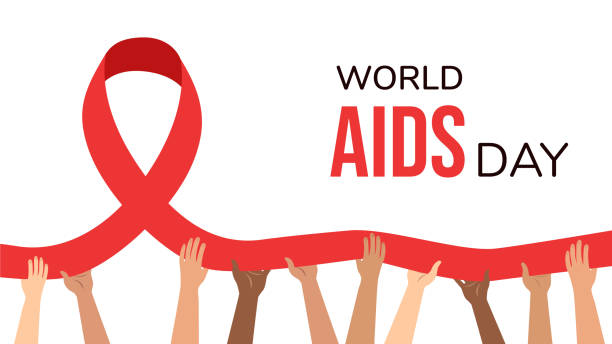
World AIDS Day, observed annually on December 1st, stands as one of the most significant international health awareness days, a time for global solidarity for the people and communities affected by HIV/AIDS, a day to remember those lost to AIDS-related illnesses, and a moment to recommit to the goal of ending AIDS as a public health threat by 2030. The observance for 2025 is particularly crucial, as the global community finds itself at a precarious crossroads, facing one of the most severe challenges in the history of the HIV response. The year 2025 has been marked by what leading global health organizations describe as a historic funding crisis that threatens to unravel decades of hard-won progress. This comprehensive analysis will explore the complete details of World AIDS Day 2025, delving into its official themes, the sobering global statistics that underscore its urgency, the multifaceted observances and events planned worldwide, and the transformative path forward required to overcome current disruptions.
The Official Theme and Its Critical Importance
The unifying theme for World AIDS Day 2025, as declared by major international bodies including the World Health Organization (WHO), the Joint United Nations Programme on HIV/AIDS (UNAIDS), and the United Nations Development Programme (UNDP), is "Overcoming disruption, transforming the AIDS response." This theme is not merely a slogan but a direct response to a confluence of crises that have upended the global fight against AIDS. According to UNAIDS, a "historic funding crisis" emerged in 2025, characterized by severe cuts from international donors, which has sent shockwaves through low- and middle-income countries that are heavily reliant on this support to sustain their HIV programs. The consequence has been a massive disruption to HIV prevention services and community-led initiatives that are vital for reaching the most marginalized populations. Simultaneously, there has been a troubling rise in punitive laws criminalizing same-sex relationships, gender identity, and drug use, which further amplifies the crisis by creating legal and social barriers that make HIV services inaccessible to those who need them most. The theme, therefore, is a call to action for sustained political leadership, renewed international cooperation, and an unwavering commitment to human-rights-centred approaches to steer the global response back on course to end AIDS by 2030.
Another powerful theme being championed for 2025, particularly by the International AIDS Society (IAS), is "Rethink. Rebuild. Rise." This theme is designed to build momentum not only for World AIDS Day but also for the upcoming 26th International AIDS Conference (AIDS 2026). It serves as a rallying cry for the global community to rethink outdated models in the face of shifting geopolitics and funding crises, rebuild the momentum and systems that have been eroded, and rise above the challenges of misinformation and censorship through scientific freedom and evidence-based policies. The Pan American Health Organization (PAHO) has also introduced a complementary, outcome-focused theme: "Zero AIDS Deaths by 2030." This campaign aims to sharpen the focus on the urgent need to manage advanced HIV disease and eliminate the remaining gaps in early diagnosis and timely treatment that continue to cause preventable deaths. These themes, while distinct in their phrasing, are interconnected in their ultimate objective: to transform a disrupted AIDS response into one that is resilient, equitable, and fully capable of achieving the Sustainable Development Goal (SDG) target of ending AIDS within the decade.
The Global Context: Alarming Statistics and the Funding Crisis
To fully grasp the urgency of World AIDS Day 2025, one must understand the stark reality of the epidemic's current state. After decades of steady progress, the global HIV response is facing its most significant setback in years. The data provided by the World Health Organization for 2024 offers a sobering snapshot of the challenge at hand. It is estimated that 40.8 million people were living with HIV globally. In that single year, approximately 630,000 people died from HIV-related causes, and an estimated 1.3 million people newly acquired HIV. These figures are not just numbers; they represent a tragic reversal of fortune, underscoring that AIDS is, unequivocally, not over.
The primary driver of this backsliding, as detailed in a new UNAIDS report released for World AIDS Day 2025 titled "Overcoming Disruption, Transforming the AIDS Response," is a profound funding emergency. The global HIV response, particularly in many low- and middle-income countries, cannot be sustained by domestic resources alone and has long depended on international solidarity and financial support. The sudden and severe reductions in funding from key international donors have crippled prevention programs, strained treatment services, and deprioritized the community-led organizations that are the backbone of an effective, grassroots response. This funding vacuum has created a domino effect, weakening entire health systems and leaving the most vulnerable populations—including key populations and children—at heightened risk. As the UNDP notes, even before these recent disruptions, no country was on track to meet the critical "Triple 10 Targets" by 2025, which aim to end stigma, discrimination, gender-based violence, and punitive laws that systematically block access to HIV services. This confluence of factors has created a perfect storm, making the commemoration of World AIDS Day 2025 more critical than ever as a platform to sound the alarm and demand urgent corrective action.
Key Messages and Pillars for a Transformed AIDS Response
In response to these daunting challenges, the leading global health agencies have outlined a set of core, interlinked messages and strategic pillars that form the blueprint for a transformed AIDS response. These are not isolated actions but a comprehensive framework designed to address the crisis from multiple angles.
The first pillar is a call to Prioritize and Integrate. The current disruption offers a painful but vital opportunity to reset and simplify the HIV response. This involves strengthening the management of drug resistance and advanced HIV disease, and, most importantly, integrating HIV services within a broader primary health care approach. By embedding HIV prevention, testing, and treatment into stronger, more resilient health systems that include robust community-based services, countries can reach more people with holistic care, sustain the gains made thus far, and build health infrastructure that benefits everyone, everywhere.
The second, non-negotiable pillar is to Address Inequity. The HIV epidemic has always thrived on and been fueled by social and structural inequalities. Ending AIDS is impossible without confronting these injustices head-on. Children, adolescent girls, and young women, particularly in the Africa region, continue to face heightened vulnerabilities. Furthermore, key populations—including men who have sex with men, trans and gender-diverse people, people who use drugs, sex workers, and people in prisons—globally bear a disproportionate burden of HIV risk and face significant barriers to care. Protecting human rights and ensuring stigma-free access to services for every individual, regardless of who they are or where they are from, is an essential prerequisite to stopping new infections and achieving genuine health equity.
The third pillar focuses on the need to Scale Innovation. The history of the HIV response is a testament to human resilience and scientific breakthroughs. Even as global funding falters, medical science continues to advance. The development of long-acting prevention tools, such as lenacapavir—a six-monthly injection to prevent HIV—represents a beacon of hope. The challenge and opportunity lie in ensuring that such lifesaving innovations are not just developed but are made accessible and affordable to those in most need. This requires political will, creative financing, and robust delivery systems to ensure that scientific progress translates into real-world impact.
The fourth and foundational pillar is to Empower Communities. From the earliest days of the epidemic, communities of people living with and affected by HIV have been the driving force of the response. They bring the lived experience, courage, innovation, and trust needed to overcome today's complex challenges. When these communities are empowered to lead and join forces with health workers, policymakers, and international partners, new pathways to success emerge, built on a shared purpose. As the UNAIDS report emphasizes, community-led services are not a luxury; they are a vital component of a successful and sustainable AIDS response, and their deprioritization amid funding cuts has had devastating consequences.
Observances and Events: From Global Advocacy to Local Action
World AIDS Day 2025 will be marked by a diverse array of observances, events, and campaigns across the globe, each designed to educate, mobilize, and inspire action. These events range from high-level international report launches to intimate local gatherings for remembrance and solidarity.
At the global advocacy level, a cornerstone event is the release of the UNAIDS World AIDS Day Report 2025, officially titled "Overcoming Disruption, Transforming the AIDS Response." This report provides a comprehensive, evidence-based assessment of the state of the global epidemic, detailing the far-reaching consequences of the funding crisis and showcasing the resilience of countries and communities that are fighting to protect progress. Its launch is a key media and advocacy event that sets the tone for global discussions. Similarly, the International AIDS Society (IAS) is actively promoting its "Rethink. Rebuild. Rise." campaign, complete with a social media toolkit and a call to action for partners worldwide to amplify this unified message. This effort is part of the broader "Road to Rio" initiative, which is building momentum towards the International AIDS Conference in 2026 by supporting regionally led HIV prevention priorities that reflect both scientific evidence and community voices, all underpinned by the principles of the Kigali Declaration which calls for meaningful partnerships, prioritizing HIV prevention, and protecting human rights.
In the United States, the National AIDS Memorial in San Francisco will host its federally designated World AIDS Day National Observance in the AIDS Memorial Grove. This poignant event is designed as a space for healing, hope, and remembrance. The 2025 observance will feature a special panel on "The Legacy of Artistic Activism," exploring how art has been used to carry memory, galvanize activism, and create space for collective healing across generations. The panel will include influential figures such as cultural leader and activist Jahnell Butler, filmmaker Matt Nadel, and educator Dr. Thomas Kurtz, emceed by ABC7 San Francisco anchor Dan Ashley. The event will also honor champions of the movement, presenting the Thom Weyand Unsung Hero Award to volunteer Troy Brunet and a National Leadership Recognition Award to the Sisters of Perpetual Indulgence, honoring their decades of grassroots response to the AIDS crisis. Meanwhile, U.S. government agencies, led by HIV.gov, are promoting the theme "Collective Action: Sustain and Accelerate HIV Progress," emphasizing the need for a coordinated national effort, guided by the National HIV/AIDS Strategy, and highlighting the life-saving work of community partners.
In the Americas region, the Pan American Health Organization (PAHO) is convening a pivotal virtual event on December 5, 2025, titled "World AIDS Day 2025: Alliance for HIV Elimination in the Americas." This webinar aims to reinforce the call for "Zero AIDS Deaths by 2030" by focusing on the major gaps that remain in access to HIV early diagnosis, PrEP, timely treatment, and the management of advanced HIV disease, which continue to hinder elimination efforts in the region. At the most grassroots level, individuals and local organizations are encouraged to get involved in countless ways—by organizing educational events in schools and universities, hosting fundraising activities like quizzes in workplaces, and using their social media platforms to share messages of solidarity and facts about HIV, utilizing official hashtags like #WorldAIDSDay and #RethinkRebuildRise to join the global conversation.
The Path Forward: A Collective Responsibility
The commemoration of World AIDS Day 2025 is a powerful reminder that the story of HIV is, at its core, one about overcoming obstacles through determination, solidarity, and innovation. From the earliest days, people living with HIV, activists, health workers, and civil society have challenged stigma and reshaped how the world approaches health and human rights. That same spirit of resilience must be our guiding force today. As expressed by UNDP's Acting Administrator, Haoliang Xu, "Every life matters, every community has a role to play, and together we can turn disruption into action, and hope into health for all." The partnership to make generic versions of the long-acting prevention drug lenacapavir available for as low as US$40 per year across 120 low- and middle-income countries by 2027 stands as a testament to how science and solidarity can work hand-in-hand to expand access at an unprecedented scale.
However, for these innovations and commitments to yield their full potential, the underlying structural barriers that perpetuate the epidemic must be dismantled. This requires sustained political leadership at the highest levels to advance policies that protect vulnerable populations, eliminate stigma and discrimination, and repeal punitive laws. It demands that the international community come together to bridge the crippling financing gap and support countries in closing the remaining gaps in HIV prevention and treatment. Ultimately, the transformative approach called for in the 2025 theme is not just about restoring what has been lost; it is about building back better—creating a more just, equitable, and resilient AIDS response that leaves no one behind. As World AIDS Day 2025 draws global attention to these urgent issues, it must serve as a catalyst for a renewed and unified global movement that finally brings an end to the AIDS pandemic, once and for all.
Photo from: iStock
0 Comment to "World AIDS Day 2025: A Global Call to Overcome Disruption and Transform the AIDS Response Amid a Historic Funding Crisis."
Post a Comment