


World Soil Day, observed annually on December 5th, stands as a profound global reminder of the indispensable yet often overlooked foundation beneath our feet: the soil. Established by the United Nations to advocate for the sustainable management of this vital resource, this day has grown into a crucial platform for awareness, education, and action. The year 2025 marks a significant and timely chapter in this story, as the focus shifts from traditional agricultural landscapes to the very heart of human habitation with the theme "Healthy Soils for Healthy Cities" . This theme challenges a common perception, urging us to recognize that soil is not merely a rural concern but a fundamental urban infrastructure, silently governing the health, resilience, and sustainability of our metropolitan lives. It is a call to reimagine our cities from the ground up, acknowledging that the quality of life above ground is intrinsically linked to the health of the earth below.
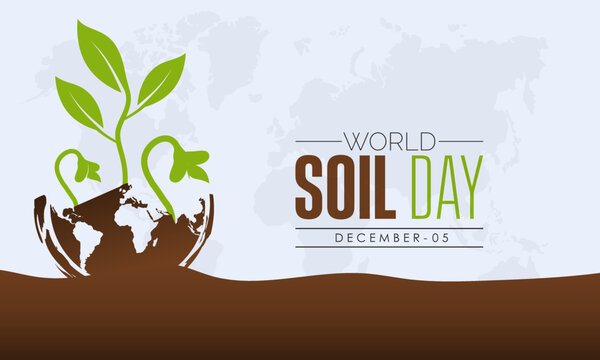
The formal journey to establish World Soil Day began over two decades ago, rooted in scientific advocacy and international diplomacy. The initial recommendation came from the International Union of Soil Sciences (IUSS) in 2002, highlighting the need for global attention to soil issues . This vision gained substantial momentum under the leadership of the Kingdom of Thailand, which championed the cause within the framework of the Global Soil Partnership (GSP) facilitated by the Food and Agriculture Organization of the United Nations (FAO). The campaign culminated in a series of pivotal endorsements: the FAO Conference unanimously supported the day in June 2013, and shortly thereafter, in December 2013, the United Nations General Assembly officially designated December 5 as World Soil Day. The choice of date is a tribute to King Bhumibol Adulyadej of Thailand, a late monarch revered for his lifelong dedication to soil conservation and sustainable land management, whose legacy continues to inspire the observance. The first official celebration took place on December 5, 2014, and since then, the day has served as a cornerstone for global soil advocacy .
To understand the gravity of this observance, one must first grasp the staggering and multifaceted significance of soil itself. Soil is far more than dirt; it is a dynamic, living ecosystem and the ultimate source of sustenance. A single tablespoon of healthy soil contains more living organisms than there are people on Earth, hosting nearly 59% of the planet's species . This biodiversity is the engine of life, driving nutrient cycles that support all terrestrial ecosystems. From a human perspective, soil is nothing short of miraculous: over 95 percent of our food is directly or indirectly produced in soils. It supplies 15 of the 18 naturally occurring chemical elements essential for plant growth, forming the bedrock of global food security. Furthermore, soils play a critical role in regulating the Earth's climate by storing massive amounts of carbon, purifying water as it filters through the ground, and supporting the vast tapestry of biodiversity upon which we depend. However, this precious resource is under severe and escalating threat. Approximately one-third of the world's soils are already degraded, and processes like erosion, pollution, salinization, and acidification continue at an alarming pace. The rate of loss starkly contrasts with the painstakingly slow pace of formation; it can take up to 1,000 years to produce just 2 to 3 centimeters of topsoil, a non-renewable resource on a human timescale that we are rapidly depleting .
The 2025 theme, "Healthy Soils for Healthy Cities," represents a strategic and necessary evolution in the soil conservation dialogue. For too long, urban landscapes have been viewed as concrete jungles divorced from natural processes. This theme shatters that illusion, revealing the hidden but critical role of urban soils. Beneath the asphalt, buildings, and streets lies a living substrate that, if managed properly, performs essential "ecosystem services" for city dwellers . When soil is permeable and vegetated, it acts as a giant sponge, absorbing rainwater during storms, which drastically reduces the risk of urban flooding. It helps regulate the urban heat island effect by cooling the air through evaporation and providing shade, making cities more livable during heatwaves. These soils also filter pollutants from air and water, store significant amounts of carbon to mitigate climate change, and can even support local food production through urban agriculture, thereby enhancing community resilience and food security .
The central antagonist in the story of urban soil health is soil sealing the practice of covering the ground with impermeable materials like concrete, asphalt, or buildings . This process effectively suffocates the soil, severing its connection to the atmosphere and hydrologic cycle. Sealed soil loses all its life-sustaining functions; it can no longer absorb water, support plant life, or host microorganisms. The consequences are vividly felt in cities worldwide: increased surface runoff leading to destructive floods, intensified urban overheating, worsened air pollution, and a dramatic loss of urban biodiversity. With over half of humanity now living in urban areas a proportion projected to reach 68% by 2050 , the imperative to protect and integrate urban soils into city planning has never been more urgent. World Soil Day 2025 is thus a direct appeal to policymakers, urban planners, scientists, and citizens to recognize soil as green infrastructure and to prioritize its health in every decision, from park design to street construction .
Responding to this call requires concrete action and widespread engagement. The FAO, its Global Soil Partnership, and collaborating entities like the European Union's "A Soil Deal for Europe" Mission have launched innovative campaigns to involve people of all ages . Two standout initiatives for 2025 are designed to foster creativity and hands-on learning. The "Soil in 1 Minute" video contest challenges scientists, educators, and artists to create short, compelling explainer videos for children aged 8–15, demystifying the wonders of urban soil. Parallel to this is the "Tiny Soil Detectives" youth contest, which invites children to become investigators of the ground beneath them. By conducting simple experiments and filing creative "detective reports," young participants explore how soil affects their daily urban environment, with every participant earning a certificate for their efforts. These contests, alongside a global map where organizations can pin their local events, illustrate the day's dynamic, participatory spirit. The message is further amplified through symbolic gestures, such as the illumination of Geneva's Jet d'Eau fountain in blue and green the colors of the global Save Soil movement serving as a beacon of awareness .
The challenges to soil health, both urban and rural, are complex and interconnected, manifesting in various forms of degradation. Soil erosion, driven by water and wind, strips away fertile topsoil faster than it can be replaced, a problem exacerbated by deforestation and unsustainable farming practices . Chemical degradation, including salinization from over-irrigation and acidification from industrial pollution, renders land less productive. Perhaps most insidious is soil pollution from industrial waste, heavy metals, agricultural chemicals, and plastics, which can poison the food chain and water sources for generations. These threats are not abstract; they directly undermine global food security at a time when agricultural production must increase significantly to feed a growing population, and they compromise the stability of ecosystems worldwide .
Combating this degradation demands a multifaceted approach centered on sustainable soil management. This encompasses a suite of practices designed to work with nature rather than against it. In agricultural contexts, this means promoting cover cropping, crop rotation, reduced tillage, and organic farming to maintain soil structure, fertility, and biological activity . The use of tools like Soil Health Cards, as implemented in India, empowers farmers with specific knowledge about their land's nutrient status, helping them apply fertilizers more judiciously and effectively. In urban settings, the solutions involve reversing soil sealing by creating more permeable surfaces, expanding green spaces and parks, investing in green infrastructure like bioswales and green roofs, and fostering community gardens and urban farms. On an individual level, every person can contribute by composting kitchen scraps to enrich soil, practicing organic gardening, supporting local conservation initiatives, and advocating for policies that protect green spaces .
World Soil Day, therefore, transcends a single annual observance. It is a vital component of the broader struggle for planetary health, inextricably linked to the achievement of the United Nations Sustainable Development Goals (SDGs), including Zero Hunger (SDG 2), Clean Water and Sanitation (SDG 6), Climate Action (SDG 13), and Life on Land (SDG 15) . The day carries forward the spirit of global movements, such as the Save Soil campaign led by Sadhguru, whose poignant words remind us that "soil is not just dirt; it is the silent provider of life" and that "to reverse the threat of soil extinction, we must come together as one force". As we look to the future, the path forward is clear. It requires sustained scientific research, robust policy frameworks, substantial investment in sustainable practices, and a fundamental shift in public perception to value soil as the cherished, life-giving resource it is. World Soil Day 2025, with its urban focus, offers a pivotal opportunity to integrate this ancient wisdom into the modern blueprint of our cities, ensuring that the ground upon which we build our future is not a lifeless slab, but a healthy, breathing foundation for all generations to come.
0 Comment to "World Soil Day 2025: Championing Urban Soil Health as the Foundation for Resilient, Sustainable Cities and Communities"
Post a Comment