


The West Indies Federation, formally established on January 3, 1958, was a bold and unprecedented political experiment in the Caribbean. It was conceived as a federation of British colonies that would transition to a single, independent nation-state within the Commonwealth. Despite its dissolution after only four years on May 31, 1962, its brief existence represented a critical pivot in Caribbean history—a moment when the region grappled with the practicalities of unifying diverse island-states into one sovereign entity. The Federation's collapse was not an end but a crucial beginning, as its institutional frameworks and hard-learned lessons directly paved the way for the modern Caribbean Community (CARICOM), transforming the dream of regional unity from a political structure into an enduring economic and social partnership .
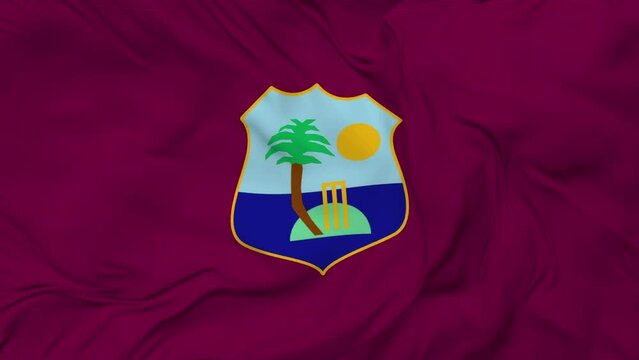
The path to the Federation began in the post-war era, amid a rising tide of anti-colonial sentiment and nationalist aspiration across the British Empire. The idea of a unified West Indies was not new, having been discussed in various forms since the late 19th century, but it gained concrete momentum at a pivotal regional conference in Montego Bay, Jamaica, in 1947 . There, British authorities and Caribbean leaders agreed to explore closer political association. This led to the formation of the Standing Closer Association Committee (SCAC), which was tasked with designing a federal structure that respected each territory's right to control its own domestic affairs. The political blueprint for the Federation was ultimately enacted by the British Parliament as the British Caribbean Federation Act of 1956, with its official birthdate set for January 1958 by an Order in Council .
The Federation brought together ten British colonial possessions: Antigua and Barbuda, Barbados, Dominica, Grenada, Jamaica, Montserrat, Saint Kitts-Nevis-Anguilla, Saint Lucia, Saint Vincent and the Grenadines, and Trinidad and Tobago . These territories spanned over 2,400 kilometers from Jamaica in the west to Barbados in the east, encompassing a combined population of approximately 3.2 to 4 million people. The demographics were a testament to the complex history of the islands, with a majority of citizens being of West African descent, alongside significant populations of East Indians (primarily in Trinidad), Europeans, Chinese, and Indigenous Caribs. Notably, some historically British territories like the Bahamas, Bermuda, British Guiana (Guyana), and British Honduras (Belize) chose not to join, often citing geographic distance, cultural ties to mainland Americas, or specific local disputes. British Guiana and British Honduras, however, maintained observer status within the Federation .
The following table details the member provinces and their basic statistics during the Federation period:
| Province | Capital | Estimated Population (c. 1960) | Area (km²) |
|---|---|---|---|
| Jamaica | Kingston | 1,660,000 | 10,991 |
| Trinidad and Tobago | Port of Spain | 900,000 | 5,131 |
| Barbados | Bridgetown | 234,000 | 431 |
| Antigua and Barbuda | St. John's | 57,000 | 440 |
| Saint Lucia | Castries | 95,000 | 616 |
| Grenada | St. George's | 91,000 | 344 |
| Saint Vincent and the Grenadines | Kingstown | 83,000 | 389 |
| Dominica | Roseau | 61,000 | 750 |
| Saint Kitts-Nevis-Anguilla | Basseterre | 55,600 | 351 |
| Montserrat | Plymouth | 13,000 | 102 |
| Federation Total | Chaguaramas | ~3,264,600 | ~20,239 |
From its inception, the Federation was crippled by a series of profound structural and political weaknesses that undermined its cohesion and efficacy. First, it was granted extremely limited financial powers. Crucially, the federal government was prohibited from levying income tax for its first five years, forcing it to rely on subventions from the United Kingdom and contributions from the member units, which were often reluctant to pay . The budgets of Jamaica and Trinidad alone were larger than the federal budget, and together they contributed approximately 85% of federal revenue, leading to resentment and fears of carrying the financial burden for the smaller islands. Second, it lacked the fundamental attributes of an economic union. There was no customs union or single market; each island maintained its own tariffs and trade policies, fearing economic domination by the larger units. Similarly, freedom of movement for citizens across the federation was not implemented, as Jamaica and Trinidad worried about uncontrolled migration from poorer islands .
Political leadership also proved divisive. The most powerful pre-independence leaders Norman Manley of Jamaica, Eric Williams of Trinidad and Tobago, and Sir Grantley Adams, who became the federal Prime Minister—found themselves in complex competition . Notably, neither Manley nor Williams contested the federal elections, choosing to retain power in their home islands, which was interpreted as a lack of faith in the federal project and significantly weakened the central government's authority. Furthermore, a bitter dispute erupted over the location of the permanent federal capital. The chosen site was Chaguaramas in Trinidad, but it was under lease to the United States as a military base. Williams and Manley's campaign to reclaim it was thwarted by the UK and US, and Prime Minister Adams's inability to resolve the issue caused immense frustration, symbolizing the Federation's powerlessness in the eyes of many Jamaicans .
The immediate catalyst for dissolution was the withdrawal of Jamaica. By 1961, discontent on the island had crystallized around several issues: the belief that the federation delayed independence, fears of subsidizing smaller territories, underrepresentation in Parliament relative to population, and the rejection of Kingston as capital . Bowing to political pressure, Premier Norman Manley called a referendum in September 1961, where 54% voted to leave the Federation. This decisive vote sealed the Federation's fate. Eric Williams of Trinidad famously declared, "one from ten leaves nought," arguing that a federation without its largest member was untenable. Trinidad and Tobago swiftly followed suit, opting for its own independence. A last-ditch effort by the remaining "Little Eight" islands to form a new federation centered on Barbados collapsed due to insurmountable financial and political issues. The British Parliament formally dissolved the West Indies Federation in May 1962 .
While the Federation failed as a political union, its legacy is foundational to the modern Caribbean. It created the first region-wide administrative framework and nurtured a generation of leaders and civil servants experienced in multilateral cooperation . Its institutions, such as the University of the West Indies (which expanded its St. Augustine campus in Trinidad during the Federation) and the West Indies Shipping Service, proved the value of shared resources. Most importantly, its collapse made clear that a different model was needed. This realization sparked a sequence of initiatives that learned from past mistakes. First came the Caribbean Free Trade Association (CARIFTA) in 1968, focusing on economic rather than political integration. Building on CARIFTA's success, the Treaty of Chaguaramas was signed on July 4, 1973, establishing the Caribbean Community and Common Market (CARICOM). Significantly, the treaty was signed at Chaguaramas the very site of the failed federal capital symbolically reclaiming the vision of unity on new terms.
CARICOM, which today includes 15 full member states and several associate members, represents the mature evolution of the federal dream . It is a supranational organization focused on economic integration, foreign policy coordination, and functional cooperation in areas like health and education, respecting the sovereignty of its members while forging deep collaborative bonds. Its flagship project, the CARICOM Single Market and Economy (CSME), seeks to achieve the integrated economic space the Federation never could, allowing for the free movement of goods, skills, services, and capital. The establishment of the Caribbean Court of Justice further underscores this commitment to a shared sovereign destiny. In this way, the West Indies Federation was not a terminal failure but a necessary precursor. Its short life provided an indispensable, if painful, lesson: that in the Caribbean, unity would have to be built cooperatively from the ground up, through voluntary economic and social integration, rather than imposed from the top down through a premature political superstate. The Federation's motto, "To dwell together in unity," remains the guiding principle for the region it helped to define.
Photo from: Adobe Stock

0 Comment to "A Dream Deferred: The West Indies Federation's Brief Life and Lasting Legacy of Caribbean Unity (1958-1962)"
Post a Comment