


The knock came on the evening of February 12, 1974. It was not a subtle knock; it was the heavy, official rap that millions of Soviet citizens had learned to recognize over six decades of revolutionary justice. When Aleksandr Isayevich Solzhenitsyn opened the door of his Moscow apartment, he found eight men standing in the hallway. They were led by a senior counselor of justice named Zverev. The writer looked at them, looked at the warrant, and knew immediately that the long duel was finally over. They had not come to intimidate him, nor to interrogate him, nor to offer him a deal. They had come to remove him physically, legally, and permanently from the body of the Russian land he had spent his entire adult life trying to save and describe.
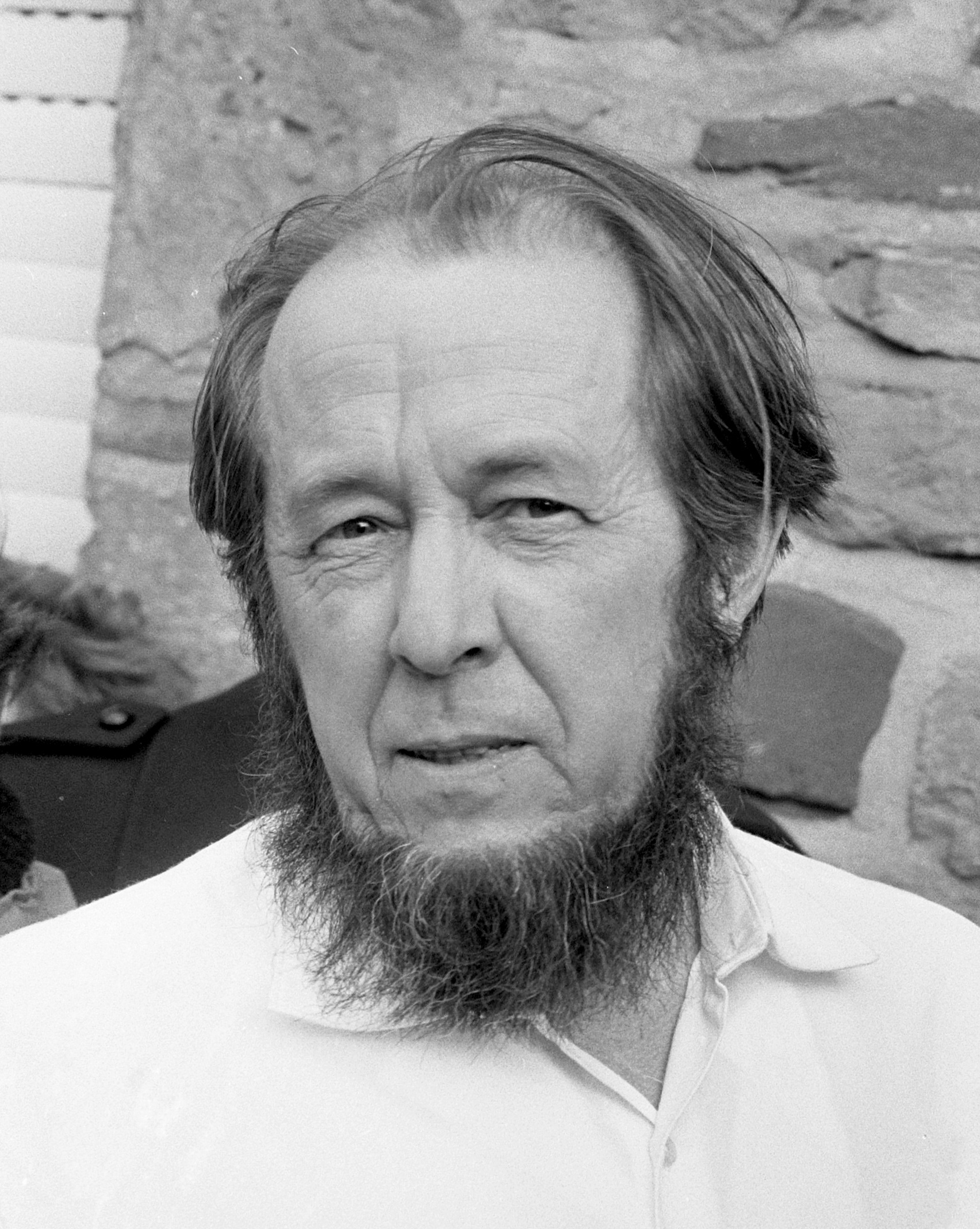
To understand the expulsion of Aleksandr Solzhenitsyn, one must first understand the explosive device that caused it. That device was not, as many Westerners assumed, his famous novels One Day in the Life of Ivan Denisovich or Cancer Ward. Those works were troublesome to the regime, certainly; they depicted the grotesque reality of Stalin’s camps and the moral rot of a system that tortured its own citizens. But those books were, by 1974, old news. The Soviet literary establishment had successfully contained them, prevented their wider distribution, and driven their author out of the Writers’ Union in 1969 . No, the bomb that finally shattered Solzhenitsyn’s life in Russia was a three-volume work of monumental fury and meticulous documentation: The Gulag Archipelago.
Solzhenitsyn had begun writing his “experiment in literary investigation” as early as 1958, just two years after his release from the endless horizonless landscape of internal exile . He had survived the camps. He had survived the cancer that nearly killed him in Tashkent. He had survived the Khrushchev Thaw and its subsequent freezing under Brezhnev. And all the while, he collected testimonies. He interviewed 227 former prisoners. He gathered letters, memoirs, court documents, and his own searing memories. He constructed, in secret, a vast archipelago of pain: a map of the network of forced labor camps that stretched from the Solovetsky Islands in the White Sea to the Kolyma goldfields in the far northeast. The book was completed in 1968. And then he sat on it.
Why did he wait? The answer lies in the moral mathematics of a man who genuinely loved his country. Solzhenitsyn knew that publication of The Gulag Archipelago would mean his destruction. More than that, he knew it would endanger everyone who had helped him the typists who transcribed his manuscripts on fragile onionskin paper, the friends who stored the pages in their apartments, the elderly women who prayed for him in villages he had never visited. He also believed, perhaps naively, perhaps heroically, that the Soviet Union might reform itself without needing to be publicly flayed. In 1972, he was even offered a deal: the regime would publish Cancer Ward officially in Moscow if Solzhenitsyn would agree to suppress The Gulag Archipelago for twenty years. He refused. He knew that history could not wait two decades, and that the dead millions of them demanded a voice .
The regime, however, did not initiate the final confrontation. It was forced upon them by a seventy-year-old woman named Elizaveta Voronyanskaya. Voronyanskaya was a teacher, a librarian, and one of Solzhenitsyn’s most trusted secretaries. In the underground network of samizdat the self-publishing system by which banned literature circulated typewriter-to-typewriter across the USSR she was a saint. She had typed the entire manuscript of The Gulag Archipelago from Solzhenitsyn’s nearly indecipherable handwriting. She had kept a copy for safekeeping. In August 1973, the KGB arrested her in Leningrad. For five days, they interrogated the frail, elderly woman. They threatened her grandchildren. They promised her freedom. And finally, Elizaveta Voronyanskaya broke. She revealed where the manuscript was hidden .
The consequences were immediate and devastating. Voronyanskaya was released. She returned to her apartment. Shortly thereafter, she hanged herself. When Solzhenitsyn received news of her suicide and the KGB’s seizure of the manuscript, he made a decision that would seal his fate. “With a feeling of inner frustration I refrained for years from releasing this completed book,” he wrote. “My duty to those still living outweighed my duty to those who had perished. But now that the State Security has, notwithstanding, got hold of the book, I have no alternative but to publish it immediately” .
In December 1973, the first Russian-language edition of The Gulag Archipelago, 1918–1956 was published in Paris by Éditions du Seuil . The book hit the Soviet leadership like a blade between the ribs. It was not merely an exposé; it was a fundamental refutation of the Soviet creation myth. The official narrative, carefully maintained since Khrushchev’s Secret Speech of 1956, held that the terror was a “cult of personality,” a deviation from Leninist norms caused by one paranoid Georgian despot. Solzhenitsyn’s meticulous, damning evidence proved otherwise. He demonstrated that the police-state apparatus was not a perversion of the revolution; it was the revolution’s logical and necessary product. Lenin, not Stalin, had created the first concentration camps in 1918. The Cheka, not the NKVD, had pioneered the methods of mass arrest and summary execution. The Gulag was not Stalin’s mistake; it was the Soviet Union’s foundation .
The Kremlin reacted with fury masked as bureaucratic contempt. In January 1974, Pravda published an article by a hack journalist named Solovyov titled “The Path of Treachery.” It was the signal for a coordinated nationwide campaign of denunciation. Newspapers across the Soviet Union reprinted the article. Solzhenitsyn was described as a renegade, a Judas, a man who had sold his motherland for Western gold. The attacks were so aggressive and so clearly coordinated that they even caught the attention of sympathetic intellectuals in the West. Heinrich Böll, the German Nobel laureate who would soon host Solzhenitsyn in exile, wrote in protest. Andrei Sakharov, the father of the Soviet hydrogen bomb and now the conscience of the dissident movement, issued a public appeal for Solzhenitsyn’s defense .
But the Kremlin had already decided on the verdict. The only question was the method of punishment. They could try Solzhenitsyn for treason Article 64 of the RSFSR Criminal Code and sentence him to death or long imprisonment. They could confine him to a psychiatric hospital, that most squalid of Soviet punishments for sane men. Or they could expel him. The first two options were dangerous. A trial would create a public spectacle; the world’s press would descend on Moscow, and the KGB would be forced to defend the indefensible in open court. Psychiatric confinement would provoke international outrage and make Solzhenitsyn a martyr. Expulsion, on the other hand, was tidy. It removed the problem without creating an obvious corpse. It silenced the voice without the mess of strangling the throat.
There was, however, a procedural complication: the destination. Solzhenitsyn could not simply be dumped at the Turkish or Iranian border. The Soviet leadership needed a willing recipient, a Western democracy that would accept the most famous dissident in the world without making excessive political capital out of the transaction. The obvious choice was West Germany. Willy Brandt’s Social Democratic government was pursuing Ostpolitik, a policy of cautious rapprochement with the Eastern bloc. The Germans were eager to demonstrate goodwill toward Moscow, but they were also constitutionally committed to political asylum and humanitarian decency. They were, in other words, the perfect landing zone: reliable enough to accept the package, compliant enough not to make a fuss .
The archives of the KGB reveal the meticulous choreography of the expulsion. On February 8, 1974, Yuri Andropov the urbane, intelligent, utterly ruthless chairman of the KGB submitted a formal proposal to Leonid Brezhnev. The plan was codified in document 388-A. Andropov’s agents had already been in contact with a “trusted agent” of Chancellor Brandt. The Germans agreed to the operation. On the evening of February 12, the Soviet ambassador in Bonn, Valentin Falin, was instructed to contact State Secretary Paul Frank and request an urgent meeting for the following morning. At 8:30 a.m. on February 13, Falin would inform Frank that Solzhenitsyn was being deported. The West German cabinet, meeting at 10:00 a.m., would issue the necessary approvals. The plane carrying Solzhenitsyn a regular scheduled flight, deliberately chosen to avoid the appearance of a special rendition would arrive at Frankfurt-am-Main at 5:00 p.m. local time. At the moment Solzhenitsyn’s foot touched German tarmac, Soviet responsibility for him would cease. And if Brandt, at the last minute, changed his mind? The document is chillingly explicit: “Solzhenitsyn will remain under arrest and the procurator’s office will investigate his case” .
The arrest itself was swift and professional. When Solzhenitsyn was taken from his apartment on the evening of February 12, he was not told his destination. His wife, Natalya Svetlova whom he called “Alya” was assured by one of the KGB officers that her husband would return soon. She did not believe him. She knew, as did Solzhenitsyn, that this was the final act. The writer had prepared for this moment years in advance. He had written a statement to be read upon his arrest, a document of magnificent defiance: “In advance I declare as incompetent any criminal trial of Russian literature, of a single book of it, of any Russian author. If such a trial is prescribed for myself, I shall not go there on my own two feet they will deliver me there in a Black Maria, with my arms twisted behind me. I shall not answer a single question at such a trial. Sentenced to imprisonment, I shall not submit to the sentence except in handcuffs. In imprisonment itself, having already lost my best eight years to forced labour for the state, and contracted cancer in the process, I shall not work for the oppressors even half an hour more. In this way I leave open for them the straightforward option of overt tyrants: to bump me off quickly for writing the truth about Russian history” .
They did not take him to the Procuracy. They took him to Lefortovo Prison, that ancient fortress of Russian state security where generations of revolutionaries, spies, and innocent men had awaited their fates. In a solitary cell, Deputy Procurator-General Malyarov formally charged Solzhenitsyn with treason under Article 64. The charge was a legal fiction, a necessary formality to justify the extra-legal expulsion that was already underway. Less than twenty-four hours later, Malyarov returned to the cell. He read another document: a decree from the Presidium of the Supreme Soviet, signed by Nikolai Podgorny, depriving Aleksandr Isayevich Solzhenitsyn of his Soviet citizenship. He was, in the space of a single winter night, rendered stateless .
The deportation was conducted with the banal efficiency of a luggage transfer. Solzhenitsyn was driven to Sheremetyevo Airport. He was placed aboard a scheduled Aeroflot flight to Frankfurt. No special plane, no dramatic police escort just a prisoner in civilian clothes, surrounded by ordinary passengers who had no idea that the bearded, weary man in seat 14B was the greatest living Russian writer. The flight was uneventful. The plane landed at 5:00 p.m. on February 13. Solzhenitsyn descended the steps onto German soil. He was met by Heinrich Böll, who had driven from his home in Langenbroich to collect him. The two Nobel laureates—one expelled, one welcoming—posed for photographers in the cold February air. Solzhenitsyn looked exhausted and grim. He refused to answer questions. His family, he said, was still in Moscow. He did not know if he would ever see them again .
The news of the deportation exploded across the world’s front pages. In Washington, Secretary of State Henry Kissinger expressed “relief” that Solzhenitsyn was no longer in immediate physical danger, and welcomed him to make his home in the United States . In Moscow, the dissident community reacted with shock and furious organization. On the very day of Solzhenitsyn’s expulsion, a group of his colleagues Andrei Sakharov, Yelena Bonner, Vladimir Maximov, and others issued the “Moscow Appeal.” They demanded that The Gulag Archipelago be published in the Soviet Union. They demanded the release of archival materials documenting KGB crimes. They demanded an international tribunal to investigate Soviet atrocities. And they demanded, with a desperate hope they knew was futile, that Solzhenitsyn be allowed to return to his homeland .
The Kremlin’s press campaign continued for another week, denouncing Solzhenitsyn in increasingly hysterical terms. But the man himself was gone, and the immediate crisis was contained. In late March, Natalya Svetlova and her young sons were permitted to leave the USSR. They traveled to West Germany, then to Switzerland, and eventually to the United States, where Solzhenitsyn would spend eighteen years in a wooded compound in Cavendish, Vermont. He built a replica of a Russian izba a traditional log house and surrounded himself with books and manuscripts. He wrote his epic cycle of the Russian Revolution, The Red Wheel. He delivered speeches warning the West about the spiritual emptiness of materialism and the continuing threat of Communist expansion. He refused Mikhail Gorbachev’s offer to restore his citizenship in the late 1980s, insisting that he would not return until Russia was truly free .
He did return, finally, in 1994. An old man with a white beard and a heart full of memory, he traveled across Russia by train from Vladivostok to Moscow, greeted by crowds who had read his books in the newly opened libraries and bookshops. He died in Moscow in 2008, at the age of eighty-nine, and was buried in the cemetery of the Donskoy Monastery. His grave is simple. Thousands of Russians have visited it.
But all of that was invisible on the evening of February 13, 1974, when John Chancellor signed off the NBC Nightly News with a personal observation. “Exile is terrible punishment for Aleksandr Solzhenitsyn,” he said, “although without the weight of world opinion, the punishment could have been much worse. The USSR simply can’t handle freedom” . Chancellor was correct about the punishment, and correct about the cause. The Soviet Union was a superpower with nuclear weapons, a vast army, and an empire stretching from the Elbe to the Pacific. It could crush Hungary, invade Czechoslovakia, and threaten the United States with intercontinental ballistic missiles. But it could not handle the freedom of one man with a typewriter. It could not endure the truth about its own history. And so it did what tyrants have always done: it opened the door and pushed the truth-teller into the cold.
The door closed behind him. But the truth, as Solzhenitsyn had written years earlier, has a stubborn habit of prevailing. The books remained. The testimonies of the 227 witnesses remained. The archipelago, once mapped, could not be unmapped. And the man himself, standing on the tarmac in Frankfurt with his small suitcase and his enormous burden of memory, remained what he had always been: the conscience of a country that had tried, and failed, to silence him.
0 Comment to "“The Door Closes: The Arrest, Exile and Enduring Witness of Aleksandr Solzhenitsyn, February 1974”"
Post a Comment